
Author: Courtney D’Agostino PT, DPT
Abstract
Postpartum hemorrhage is a leading cause of increased morbidity and mortality in pregnant and postpartum women. It is a common complication in women with placenta accreta, which occurs when the placenta adheres too deeply to the uterine wall. These cases often require cesarean delivery as well as cesarean hysterectomy. Due to the high-risk nature of this diagnosis, many women end up in critical condition post delivery and develop impairments in multiple body systems warranting physical therapy involvement. In this case study, a 34-year-old woman sustained a massive hemorrhage following a cesarean section and cesarean hysterectomy in the setting of placenta accreta. She remained in critical condition post operatively requiring ICU level of care. Despite the benefits noted in this paper, physical therapy involvement is currently not a standard of care provided to postpartum women in the hospital she delivered in. With the collaboration of the ICU nurse and the acute care physical therapist, the patient was able to receive a physical therapy evaluation and intervention to improve her readiness for discharge, decrease her chances of readmission, and lower her overall morbidity and mortality. Physical therapists can and should be utilized in the acute care setting for critically ill postpartum women to lower morbidity and mortality.
Background
Hemorrhage is a leading cause of death among pregnant and postpartum women. Hemorrhage is defined as greater than 500mL of blood loss in a vaginal birth and greater than 1,000mL in a cesarean delivery. In 2020, the CDC reported 57 pregnancy related deaths caused by hemorrhage making up 11.2% of the deaths in this population (1). Most commonly, hemorrhage is the result of ruptured ectopic pregnancy, postpartum hemorrhage, or placenta accreta. For this case study, the focus will be on placenta accreta which makes up 12.7% of hemorrhage related deaths (2).
Placenta accreta occurs when the placenta attaches too deeply to the uterine wall. Women who have undergone prior cesarean deliveries and have been diagnosed with placenta previa are at higher risk. Due to the complications that arise from placenta accreta, it often leads to increased morbidity and mortality and prolonged hospitalization. Placenta accreta is an indication for a planned c-section between 34 and 35w6d and typically results in a cesarean hysterectomy. As a result of the high-risk nature of placenta accreta, it is recommended that women with this diagnosis deliver at a level III or higher maternal care center to have access to a critical care team and blood banks needed for mass transfusion (3). Currently, there is no cure for placenta accreta.
The patient being discussed in this case study underwent a c-section and cesarean hysterectomy due to placenta accreta, resulting in a massive hemorrhage of 10,000mL. The complexity of this case increased the patients risk for developing impairments involving multiple body systems (4). To decrease her mortality and morbidity and enhance function, reduce pain, and lower her risk for developing complications, physical therapy (PT) services were involved in the acute care setting (5).
Patient Presentation
The patient is a 34-year-old obese woman G8P6017. She has undergone 6 prior c-sections. She had an uncomplicated prenatal period with mild anemia (hematocrit of 32). The patient has a male partner who plans to take time off work to assist with newborn care. She works at Walmart and due to socioeconomic reasons, she returned to work within a few weeks after her prior c-sections despite recommendations from her physician.
The planned c-section was performed at 34 weeks’ gestation at a level III maternal care center. Once the infant was delivered, placenta accreta was observed. A sharp curettage was performed to remove the placenta resulting in severe hemorrhage requiring a partial hysterectomy. Per the operative report, the surgeon believed to have achieved hemostasis therefore the incision was closed. Soon after, significant bleeding was observed from the vagina requiring the incision to be reopened, and the remaining cervix was removed. Eventual hemostasis was achieved, and the incision was closed. The patient received 28 units of PRBCs.
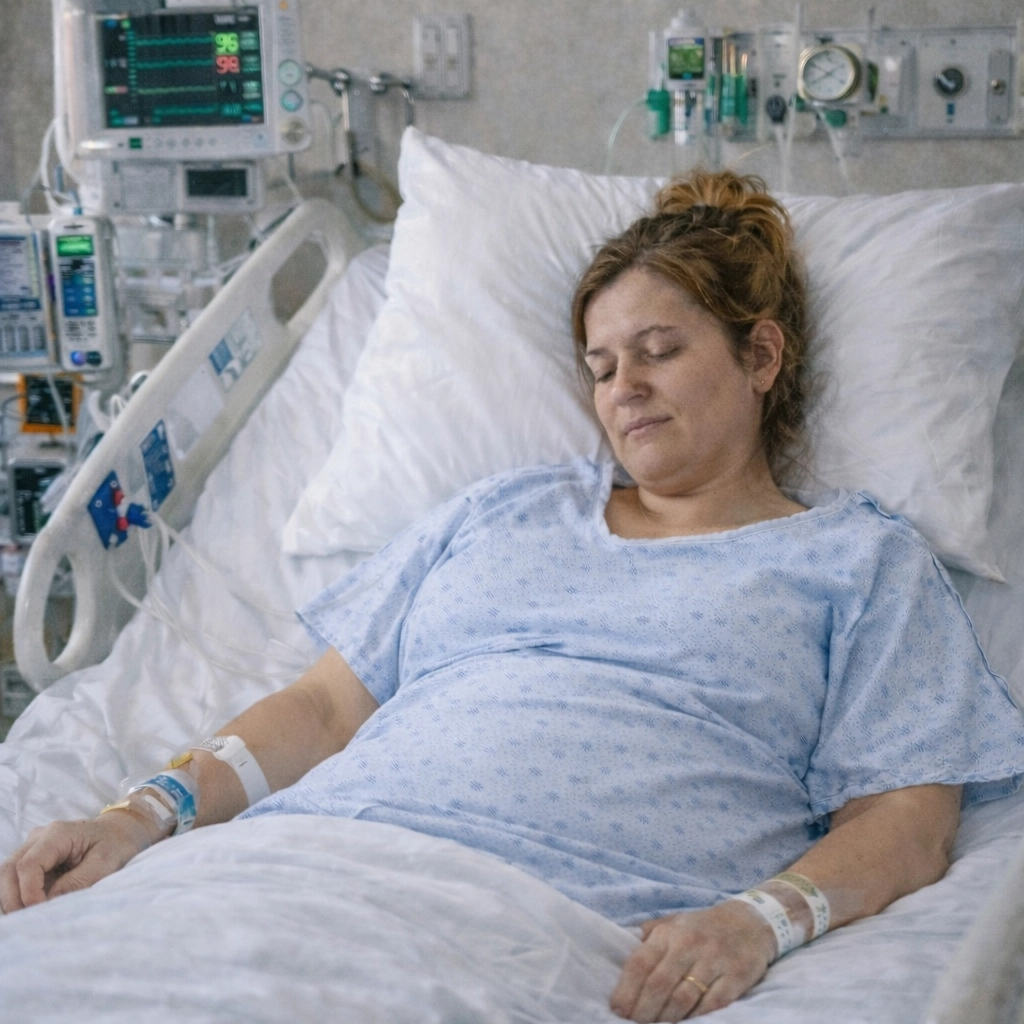
The patient was transferred to the ICU in critical condition and remained intubated for the following 24 hours. She had an estimated blood loss of 10,000 mL requiring mass transfusion, vasopressor support, and mechanical ventilation. The PT evaluation was performed 48 hours post operatively in the ICU. The patient’s hemoglobin had increased to 7.8 from a low of 6.8. She was on a PCA for pain control.
Differential Diagnosis
A PT evaluation was indicated in this case due to the critical condition of the patient as well as the abdominal incisions that inherently will affect function and mobility. The evaluation was performed in the ICU setting after the patient had been extubated, weaned to 4L of supplemental oxygen, and no longer requiring vasopressors.
Throughout the evaluation, it was evident that the patient was distracted, wanting to see her newborn in the NICU. She was dismissive of education provided, frequently referencing her prior recoveries from c-sections and appeared to have poor insight into the severity of this delivery. The PT focused on providing education involving minimizing her risk of readmission and developing complications.
The patient presented with functional impairments in balance, strength, and activity tolerance. She required minimal assistance with bed mobility, transfers, and 4ft of gait without an assistive device. She declined further activity as this was her first time out of bed and denied dizziness or shortness of breath. She declined use of abdominal binder despite education on use and benefits.
Vital signs were monitored closely throughout the evaluation. Her blood pressure was taken before and after activity and was 135/62 and 120/58 respectively. Although this doesn’t constitute orthostatic hypotension, a discussion was had with the nurse and patient about signs and symptoms to monitor for when mobilizing. Heart rate and oxygen saturation were stable. She was most limited by pain, which she rated as 5/10 despite use of PCA prior to mobility, as well as generalized fatigue and weakness.
To objectively score the patients function, the AM-PAC 6-clicks was performed resulting in a daily activity score of 17 and a basic mobility score of 16 indicating poor readiness for discharge home (6). Due to her functional limitations at the time of the evaluation, further outcome measures such as the 2 min walk test were unable to be performed.
Rehab interventions
As a result of the nurse advocating for the patient, a PT consultation was placed 48 hours post cesarean section. Due to the complexity of this case, the patient would have benefited from earlier intervention from PT to minimize complications of prolonged bedrest, such as thromboembolic events (7).
Rehabilitation interventions addressed included education, therapeutic activities, and vital sign monitoring. The focus was placed on education, which involved normal vital response to activity, red flags, benefits of the abdominal binder, wound care, and breathing techniques. As noted above, the patient declined use of an abdominal binder despite discussing the research supporting decreased pain and improving mobility (8).
Mobility interventions included instruction on compensatory strategies to improve independence and facilitate a safe discharge home. The patient was instructed on use of the log roll to decrease pain with bed mobility. The patient was encouraged to have her spouse assist her and to purchase a bed rail to decrease use of abdominal muscles during the acute phase of healing.
To address the patients’ impairments with transfers and gait, a bariatric walker was provided, and the nurse and patient were instructed on safe assistance and progression of mobility. A discussion was had on the importance of increased time between transitions as the patient is at high risk for developing orthostatic hypotension. Goals were discussed to improve her function needed to discharge home, care for herself, and care for her newborn.
Outcomes
One follow-up PT treatment was performed in the acute care setting. The patient had been transferred to the antepartum unit and was able to demonstrate improvement in multiple functional outcomes. Her hemoglobin had a slight increase to 8.1 and her vitals had been stable. Her pain was a 3/10 during mobility with oral analgesics. Her AM-PAC 6-click scores improved to 21 for daily activity and 23 for basic mobility. Despite the patients dismissive deminer during the initial interaction, her readiness for education improved and she appeared more engaged.
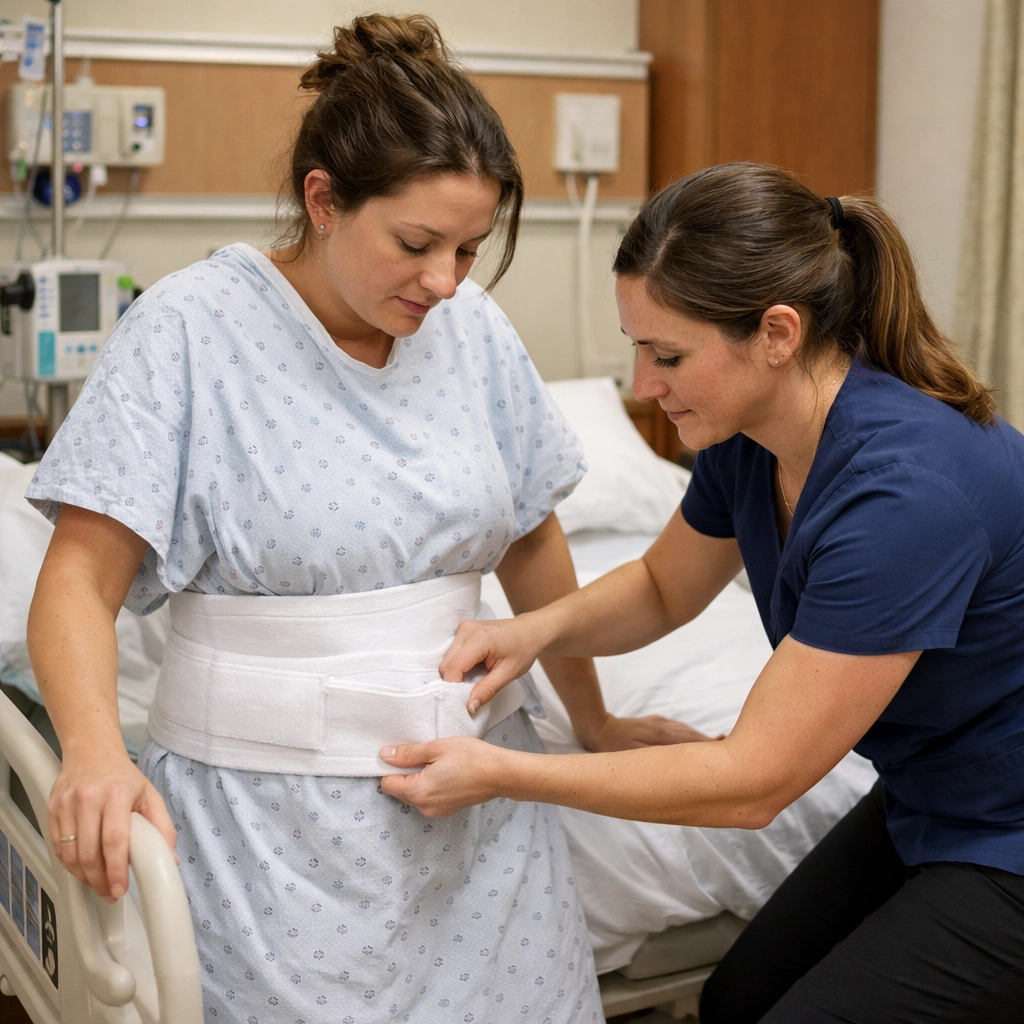
The PT spent time reviewing education provided during the initial evaluation. With encouragement, she was agreeable to don the abdominal binder during mobility. With the assistance of the therapist and her significant other, she donned the binder in supine to assist with proper positioning in the setting of a panus. After mobility, the patient reported improved sense of support and decreased pain.
Due to the functional improvements noted, the patient was able to complete the 2 min walk test. She ambulated 450ft which is below the norm for healthy women of her age, but adequate for home ambulation (9). A discussion was had on accessing a wheelchair when visiting her infant in the NICU as this distance is farther than she can currently tolerate. The patient had adequate vital sign response to activity (pre 123/58; post 138/60) and denied symptoms of anemia or orthostatic hypotension.
No further follow up with PT was performed in the hospital setting due to lack of resources. Of note, this patient experienced visual deficits hours prior to discharge and due to education provided by the interdisciplinary team, she was able to address the concern with the medical team and undergo tests to rule out preeclampsia. She was discharged 5 days post cesarean section, and her infant remained in the NICU for 7 days.
Plan of Care
Based on this patient’s diagnosis of severe obstetric hemorrhage, she is at increased risk for readmission (10). If the resources allowed, this patient would greatly benefit from remote postpartum monitoring. According to Fein et al, to decrease hospital readmissions in women with severe obstetric hemorrhage, closer postpartum surveillance should occur (10). Unfortunately, remote postpartum monitoring is not a service provided in the community this case occurred in. For this reason, the patient was provided with postpartum support resources and referred to outpatient PT to improve her recovery. It was recommended that she purchase a blood pressure device and pulse oximeter to assess for red flags indicating the need for medical attention.
Reflection/discussion
The patient discussed presented with multiple risk factors for increased morbidity and mortality within her first year postpartum including obesity, cesarean section, cesarean hysterectomy, placenta accreta, and severe hemorrhage. Unfortunately, a PT consultation was not part of an automatic order set or even part of physician discussions within the first 24 hours. These medically complex postpartum cases should not be treated any differently than other critically ill patients when it comes to rehabilitation consultations. In a systematic review by Kayambu et al, PT services for medically complex patients in the ICU were noted to improve quality of life, physical function, strength, and decrease hospital days (11). Without collaboration from the ICU nurse, this patient may not have received PT, therefore missing a key piece of her care and recovery. Communication between the interdisciplinary team led to her safe discharge 5 days post severe hemorrhage. There was no follow up from the acute PT once the patient was discharged home.
According to the American College of Obstetricians and Gynecologists, “To optimize the health of women and infants, postpartum care should become an ongoing process, rather than a single encounter, with services and support tailored to each woman’s individual needs” (12). Although this is referencing contact with a physician, PTs can and should be utilized in the postpartum period to assess physical wellbeing, the patient’s physiological response to activity, and provide education surrounding rehabilitation during the first 6 weeks postpartum. The involvement of physical therapy in the acute care setting for patients with severe obstetric complications should be a standard of care as it can have a positive impact on the overall morbidity and mortality related to this population.
References
- Centers for Disease Control and Prevention. Pregnancy-Related Deaths: Data From Maternal Mortality Review Committees in 38 U.S. States, 2020. Maternal Mortality Prevention. Published May 28, 2024. https://www.cdc.gov/maternal-mortality/php/data-research/index.html
- Hollier LM, Busacker A, Njie F, Syverson C, Goodman DA. Pregnancy-Related Deaths Due to Hemorrhage: Pregnancy Mortality Surveillance System, 2012–2019. Obstetrics and Gynecology. Published online May 30, 2024. doi:https://doi.org/10.1097/aog.0000000000005628
- Cahill AG, Beigi R, Heine RP, Silver RM, Wax JR. Placenta Accreta Spectrum. American journal of obstetrics and gynecology. 2018;219(6):B2-B16. doi:https://doi.org/10.1016/j.ajog.2018.09.042
- Van den Akker T, Brobbel C, Dekkers OM, Bloemenkamp KWM. Prevalence, Indications, Risk Indicators, and Outcomes of Emergency Peripartum Hysterectomy Worldwide. Obstetrics & Gynecology. 2016;128(6):1281-1294. doi:https://doi.org/10.1097/aog.0000000000001736
- Segraves RL, Segraves JM. Reducing Maternal Morbidity on the Frontline: Acute Care Physical Therapy After Cesarean Section During and Beyond the COVID-19 Pandemic. Physical Therapy. Published online March 13, 2021. doi:https://doi.org/10.1093/ptj/pzab093
- Activity Measure for Post-Acute Care (AM-PAC) – “6 Clicks” Inpatient Short Forms. APTA. Published November 30, 2017. https://www.apta.org/patient-care/evidence-based-practice-resources/test-measures/activity-measure-for-post-acute-care-am-pac–6-clicks-inpatient-short-forms
- Ganer Herman H, Ben Zvi M, Tairy D, et al. Enhancing patient mobility following cesarean-delivery – the efficacy of an improved postpartum protocol assessed with pedometers. BMC Pregnancy and Childbirth. 2020;20(1). doi:https://doi.org/10.1186/s12884-020-03046-z
- Saeed S, Rage KA, Memon AS, et al. Use of abdominal binders after a major abdominal surgery: a randomized controlled trial. Cureus. 2019;11(10):e5832. doi:10.7759/cureus.5832.
- Physiopedia. 2 Minute Walk Test. Physiopedia. Published 2017. https://www.physio-pedia.com/2_Minute_Walk_Test
- Fein A, Wen T, Wright JD, et al. Postpartum hemorrhage and risk for postpartum readmission. The Journal of Maternal-Fetal & Neonatal Medicine. 2019;34(2):187-194. doi:https://doi.org/10.1080/14767058.2019.1601697
- Kayambu G, Boots R, Paratz J. Physical Therapy for the Critically Ill in the ICU. Critical Care Medicine. 2013;41(6):1543-1554. doi:https://doi.org/10.1097/ccm.0b013e31827ca637
- American College of Obstetricians and Gynecologists. ACOG Committee Opinion No. 736. Obstetrics & Gynecology. 2018;131(5):e140-e150. doi:https://doi.org/10.1097/aog.0000000000002633
Dr. Courtney D’Agostino has her doctorate degree in physical therapy and has been working in a level 2 trauma hospital for over 5 years. Although most of her time has been spent treating patients in the trauma ICU, the general surgery unit, and the orthopedic units, Dr. D’Agostino is working on expanding her knowledge to provide services to mothers on the antepartum and postpartum units.