Author: Tessa Ladd, MS, OTR/L, PCES
Introduction
There is immense anticipation when it comes to the birth of a first child. The anticipation grows, as the baby does, leading up to the day of delivery. When best laid plans go awry, it can be jarring to say the least. Imagine experiencing sharp and radiating pelvic pain so severe that it is unbearable to walk after giving birth. This was the case with a patient named Sarah, and many other women who have had similar experiences, even with otherwise uneventful deliveries (Norvilaite et al., 2020). Sarah had an injury called Symphysis Pubis Diastasis (SPD). SPD is an injury that can occur during the later stages of pregnancy, though it is typically an injury sustained in the process of labor (Chawla et al., 2017). As a pelvic floor occupational therapist, SPD is a diagnosis that I had only learned about in educational courses prior to meeting Sarah in the outpatient therapy setting. Sarah was 11 days postpartum and had been in severe pain, immobile, and unable to independently care for her baby since the day of her delivery. The aim of this case study is to highlight the need for earlier care and intervention for postpartum mothers who are not having a typical postpartum experience.
The symphysis pubis is a joint that functions to connect the left and the right sides of the pelvis at the front. During pregnancy and in preparation for labor, there is laxity in this joint of up to 10mm (Seidman & Siccardi, 2023). Any distance greater than 10mm indicates SPD, which can cause a significant amount of pain and dysfunction (Anastasio et al., 2023) and is typically assessed with a pelvic x-ray (Nitsche & Howell, 2011). Research shows a wide range of occurrences for this diagnosis, from 1 in 300 to 1 in 30,000 births (Stolarczyk et al., 2021).
Initial Evaluation
Sarah was scheduled to come in for her outpatient pelvic floor evaluation at 11 days postpartum. While completing a chart review in preparation for her first visit, I quickly realized that this was not a typical case. The labor and delivery note indicated that she had sustained a laceration, which was repaired. Beyond this, it appeared that both Sarah and her baby were healthy, and they should have been able to continue a normal course of hospital recovery. But there was a problem. Sarah was unable to walk. As with many other women who have experienced SPD, she had extreme pain when trying to roll in bed, lift one leg, or stand on one leg (Sung et al., 2021). Her x-ray imaging was noted to be negative, and she was ultimately discharged home in a wheelchair. In the following days, Sarah made two additional visits to different emergency departments that provided her with no relief and no further information. What went consistently unnoticed and/or ignored was that the x-ray imaging and corresponding impressions noted: “Widening of the pubic symphysis measuring 13 mm. No fracture.” It was clear that Sarah was suffering from SPD.
Sarah and her husband arrived at my office exhausted, and I felt the weight of their pain and confusion. They had no clear expectations for our meeting and I wanted to cautiously navigate the delicate conversation that would ensue. I explained the concept of SPD and a potential missed diagnosis without casting blame, emphasizing that the information from the x-ray is helpful because it gives us a plan for how to move forward and what to expect. It was equally important to validate my patient’s physical pain and emotional grief about how her start in motherhood was not going remotely how she anticipated (Sung et al., 2021).
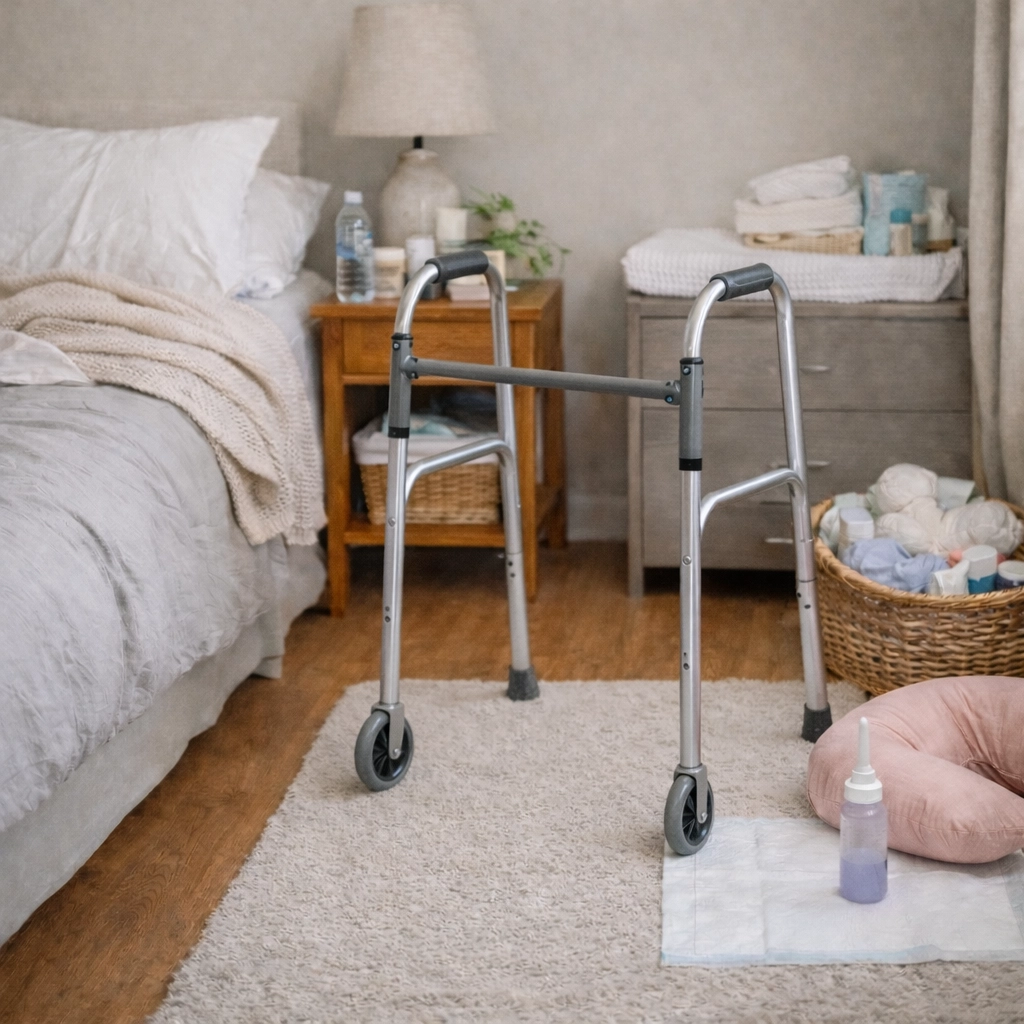
I started by explaining the benefits of creating support around her pelvis by using a sacroiliac belt. Providing support around the pelvis, along with therapies to strengthen the surrounding musculature, is a common conservative approach (Herren et al., 2015). We trialed a Serola belt (Serola Biomechanics, n.d.) and Sarah showed immediate improvement in her pain and ability to stand. As with other case studies highlighting conservative treatment approaches, we also practiced ambulating with a rolling walker for additional stability (Markh & Stern, 2015) and Sarah was able to walk for five feet in the office. In addition to returning to walking, Sarah had functional goals that involved being able to independently care for herself and her newborn.
One concern that both Sarah and her spouse expressed was the difficulty of physically attending outpatient appointments. They were hopeful that home therapy was an option even after learning that our office was solely outpatient. Between immobility, pain, sleep deprivation, and learning to care for a newborn, it was clear that their earnest request for a home visit needed to be considered. A postpartum home visit had never been conducted within our practice, and I knew that I would need to advocate for her. Thankfully, with the support from our Director of Rehabilitation and my supervisor, I was approved to visit Sarah in her home and to conduct virtual visits.
First Treatment Session
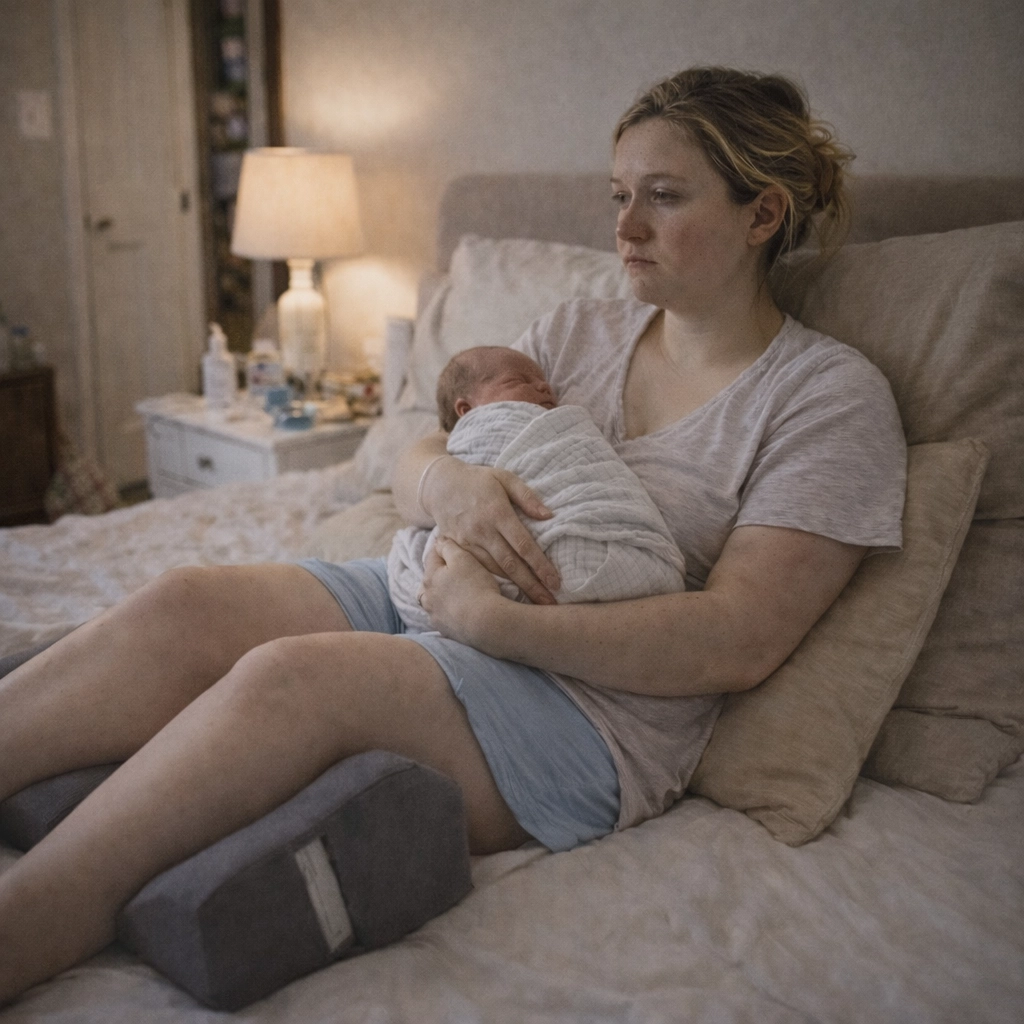
I visited Sarah at her home for the first treatment session one week later. She was pleased to share that she was ambulating household distances with her Serola belt and rolling walker. She was only using the wheelchair for sitting, as she was not yet able to get on and off her low sofa. She was eager to make more progress, especially in being able to care for her newborn independently. Both Sarah and her spouse conveyed that overnight care for their newborn child was one of their biggest challenges. We spent most of the session in their primary bedroom as I provided recommendations to increase the ease and efficiency in which they could complete nightly tasks, including but not limited to diaper changes, breastfeeding, burping the baby, and helping the baby return to sleep.
Following this, Sarah participated in gentle exercises from the bed. We practiced safe bed transfers, diaphragmatic breathing, transversus abdominis engagement, and pressure management strategies. At the end of our session, we set goals for the course of the next week with a focus on newborn care and returning to higher level home tasks, such as laundry management and accessing the low dishwasher.
Second Treatment Session
During our second treatment session, also at Sarah’s home, Sarah showed significant improvements in her pain and mobility and was able to phase out the use of her rolling walker indoors. She and her spouse shared that they implemented the strategies and suggestions about nighttime newborn care and that their sleep quality and overall quality of life were much improved. Sarah’s confidence was improving at home, and she was thrilled to be able to prepare a stovetop meal. An area of concern for her was being able to participate in tasks that required bending or squatting, such as laundry and dishwasher management. We spent time in both the laundry room and the kitchen as we practiced transitioning back and forth from standing to various types of kneeling and sitting on a low stool. Sarah now had a plan for returning to both meaningful tasks.
For the remainder of our session, we practiced getting on and off the floor in the baby nursery, which would be important for many childcare related tasks. With training, Sarah was able to transition from standing to sitting with minimal support by holding onto the crib. Her baby joined our session, and we practiced safe babywearing with a focus on good posture awareness, alignment, and core engagement. At the end of our second session, intentions were set for the next week, including participating in a short family walk in the neighborhood.

Third Treatment Session
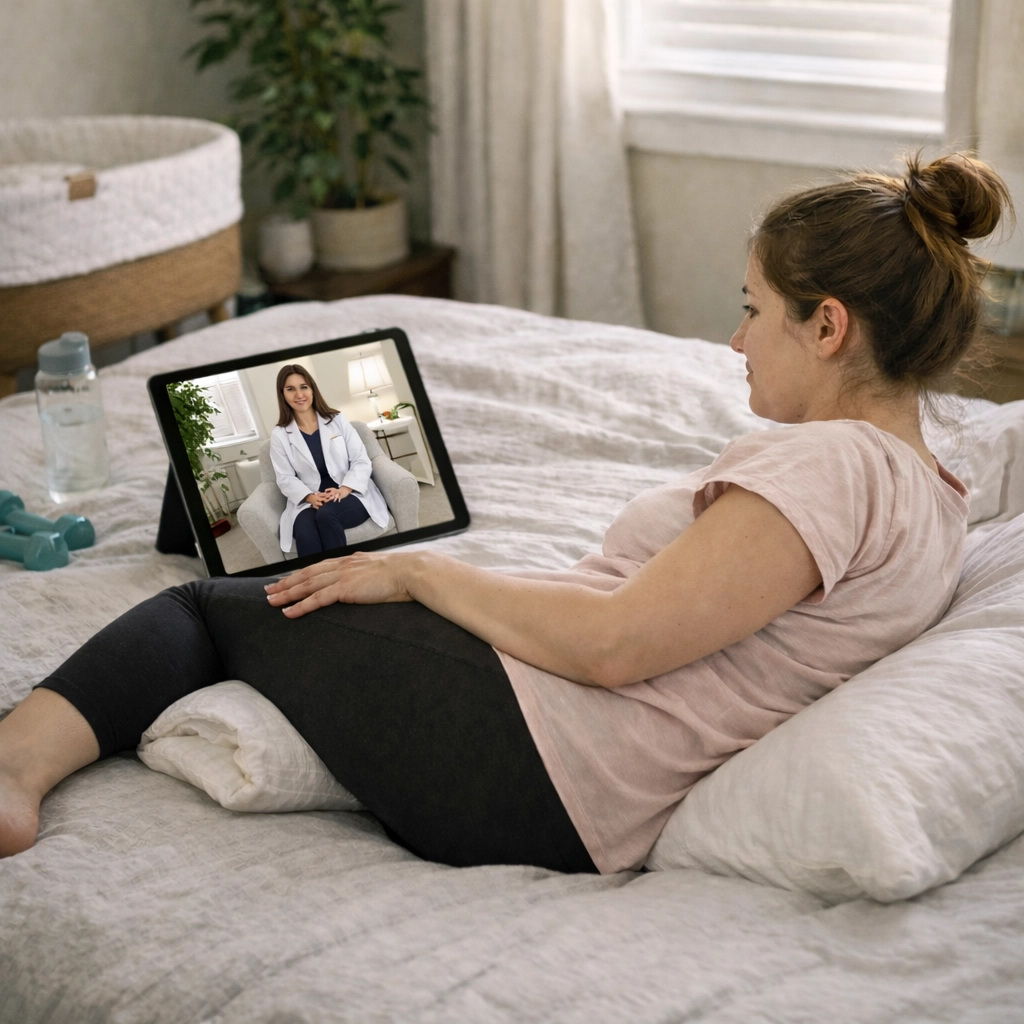
Sarah and I met virtually for her third treatment session. She shared that things were progressively getting easier and that she had started walking outdoors with her husband and baby. Sarah was also happy to report that she could independently manage the newborn nighttime routine without assistance. She no longer required her rolling walker outdoors, however the Serola belt continued to help provide stability and support. She was no longer using the wheelchair for sitting and could transfer on and off their low couch independently.
We focused on therapeutic exercises during her third session, with emphasis on improving core engagement and pelvic girdle stability. Sarah was able to progress in both areas and tolerated more challenging exercises, which she performed on the floor, a progression from the bed during our first treatment session. Some of her exercises included bridges, cat-cow, and bracing her core from various positions. From a pelvic health standpoint, Sarah shared that she was experiencing some urinary leakage immediately after using the restroom, also known as post micturition dribbling. I provided education and went over various strategies to promote more complete bladder emptying, such as diaphragmatic breathing and pelvic tilts.
Fourth Treatment Session
Our fourth treatment session was conducted virtually, with a focus on progressing her pelvic girdle stability and deep core strength. Sarah reported that her pain was improving significantly, and she was gradually decreasing her dosage of ibuprofen. She was transferring on and off the floor without any assistance or support. Sarah also had a successful outing to Costco. Our session included strategies for achieving a proper hip hinge, managing intraabdominal pressure, and maintaining good core engagement during functional activities such as carrying her baby. From a pelvic health standpoint, Sarah reported that her post micturition dribbling was gradually improving and that pelvic tilts were helpful. As Sarah was scheduled for her 6-week follow-up with her OBGYN, tentative plans were established to complete a pelvic exam at the following treatment session to assess her pelvic floor muscle coordination, strength, and endurance.
Fifth Treatment Session
Our fifth treatment session was a day for celebration as Sarah effortlessly walked down the hallway in my office. She had met so many salient and functional goals and she was thrilled with her progress. Sarah shared that she had minimal pain, with some lingering inguinal and low back pain that mostly occurs with increased activity. Her pelvic exam was performed during this session, which revealed adequate coordination and poor endurance. She had minor deficits in strength and demonstrated limitations in her range of motion due to tension within specific muscles of her pelvic floor. Sarah was receptive to gentle manual therapy to address some of this tension. Upon completion of manual therapy, she was happy to share that the pain in her inguinal region and low back was improved.
Conclusion
Sarah’s treatment will continue with a focus on progressing her strength and stability and will include ongoing screening for pelvic floor dysfunction. Her progress has been transformative, from needing a wheelchair on our first meeting to taking neighborhood family walks by her fifth session. Sarah’s story is one of triumphant perseverance during a very arduous time of entering motherhood. While I am incredibly grateful for the opportunity to provide treatment in her home when traveling to an outpatient office was not feasible for her, Sarah’s story highlights a greater need for earlier intervention. Eleven days of pain, immobility, and uncertainty should not be an acceptable standard of care, especially when her signs and symptoms aligned with a treatable diagnosis while she was still under hospital care. Occupational therapy and/or physical therapy referrals in the hospital setting should be a first-line consideration for postpartum moms encountering pain and difficulty with walking. In addition, initial home visits are warranted and should be pursued to assess and assist patients in their home setting to promote their function and success in returning to meaningful tasks.
References
- Anastasio, M. , Anastasio, A. & Kuller, J. (2023). Peripartum Pubic Symphysis Diastasis. Obstetrical & Gynecological Survey, 78 (6), 369-375. doi: 10.1097/OGX.0000000000001156.
- Chawla, J. J., Arora, D., Sandhu, N., Jain, M., & Kumari, A. (2017). Pubic symphysis diastasis: a case series and literature review. Oman medical journal, 32(6), 510.
- Herren, C., Sobottke, R., Dadgar, A., Ringe, M. J., Graf, M., Keller, K., … & Siewe, J. (2015). Peripartum pubic symphysis separation, Current strategies in diagnosis and therapy and presentation of two cases. Injury, 46(6), 1074-1080.
- Markh, A., & Stern, M. (2015). Postpartum pubic symphysis diastasis and the role of physiatry in restoring function: a case report. J Phys Med Rehabil Disabil, 1(005).
- Nitsche, J. F., & Howell, T. (2011). Peripartum pubic symphysis separation: a case report and review of the literature. Obstetrical & gynecological survey, 66(3), 153-158.
- Norvilaite, K., Kezeviciute, M., Ramasauskaite, D., Arlauskiene, A., Bartkeviciene, D., & Uvarovas, V. (2020). Postpartum pubic symphysis diastasis, conservative and surgical treatment methods, incidence of complications: Two case reports and a review of the literature. World journal of clinical cases, 8(1), 110.
- Seidman AJ, Siccardi MA. Postpartum Pubic Symphysis Diastasis. 2023 Jul 17. In: StatPearls [Internet]. Treasure Island (FL): StatPearls Publishing; 2025 Jan. PMID: 30725728.
- Serola Biomechanics, Inc. (n.d.). Serola Sacroiliac Belt. https://www.serola.net/serola-sacroiliac-belt. Accessed April 3, 2025.
Stolarczyk, A., Stępiński, P., Sasinowski, Ł., Czarnocki, T., Dębiński, M., & Maciąg, B. (2021). Peripartum Pubic Symphysis Diastasis, Practical Guidelines. Journal of clinical medicine, 10(11), 2443. https://doi.org/10.3390/jcm10112443 - Sung, J. H., Kang, M., Lim, S. J., Choi, S. J., Oh, S. Y., & Roh, C. R. (2021). A case, control study of clinical characteristics and risk factors of symptomatic postpartum pubic symphysis diastasis. Scientific Reports, 11(1), 3289.