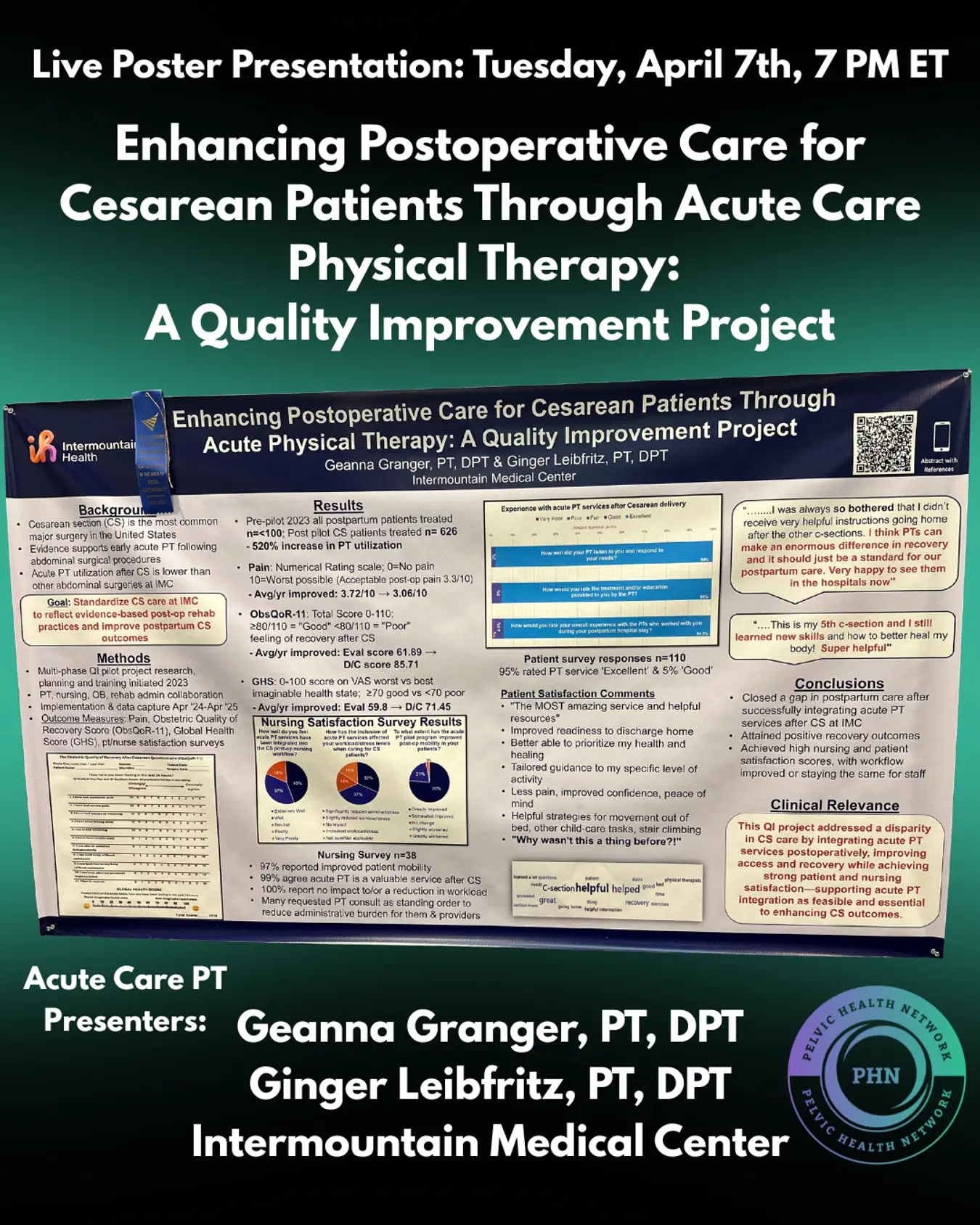
When a professional athlete collapses on the field with a ruptured ligament, the response is instantaneous. Medical teams rush to their aid. For injuries such as a torn ACL, surgery often follows several weeks later, after swelling subsides and the knee regains motion. Yet the rehabilitation process still begins early, well before the operation and continues as a standard part of recovery. The system treats the injury not just as a structural failure, but as a temporary suspension of professional function. Consequently, the path back to the field is paved with automatic referrals and standardized milestones.
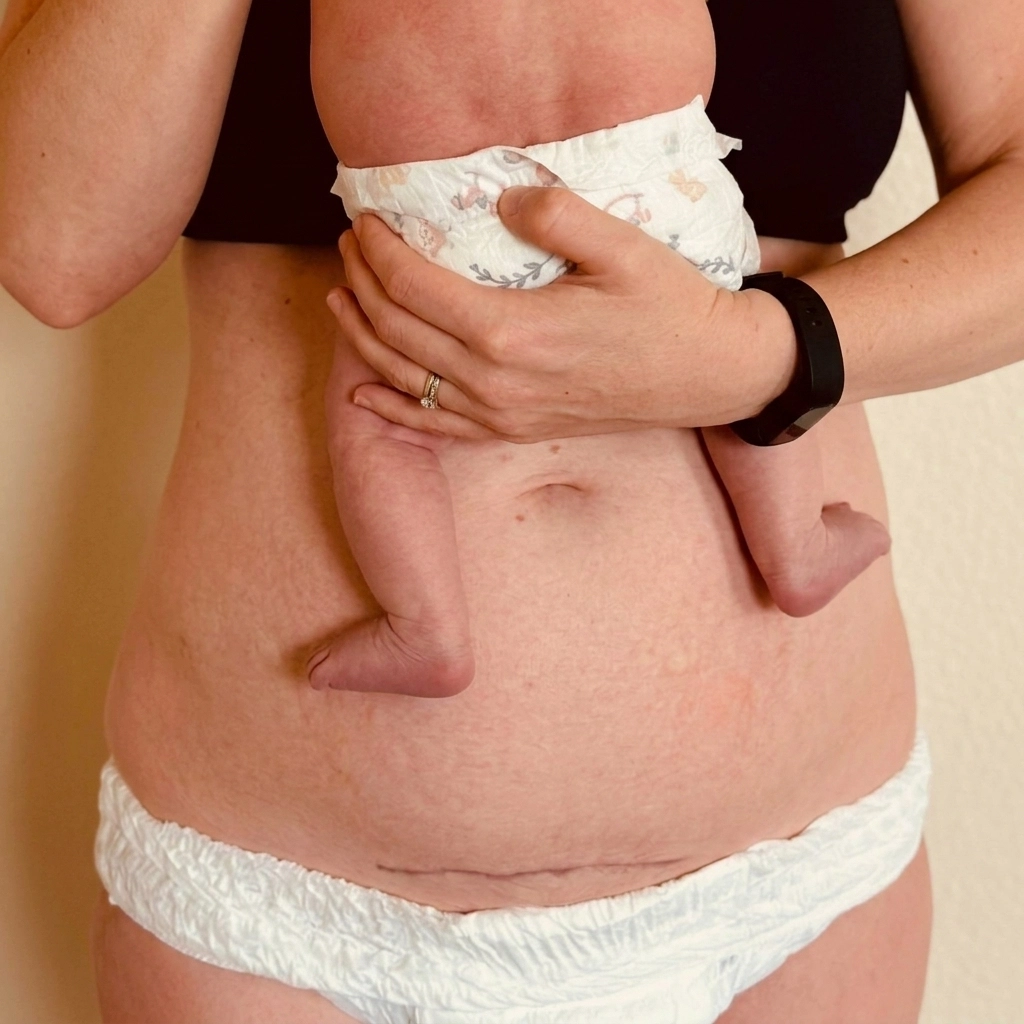
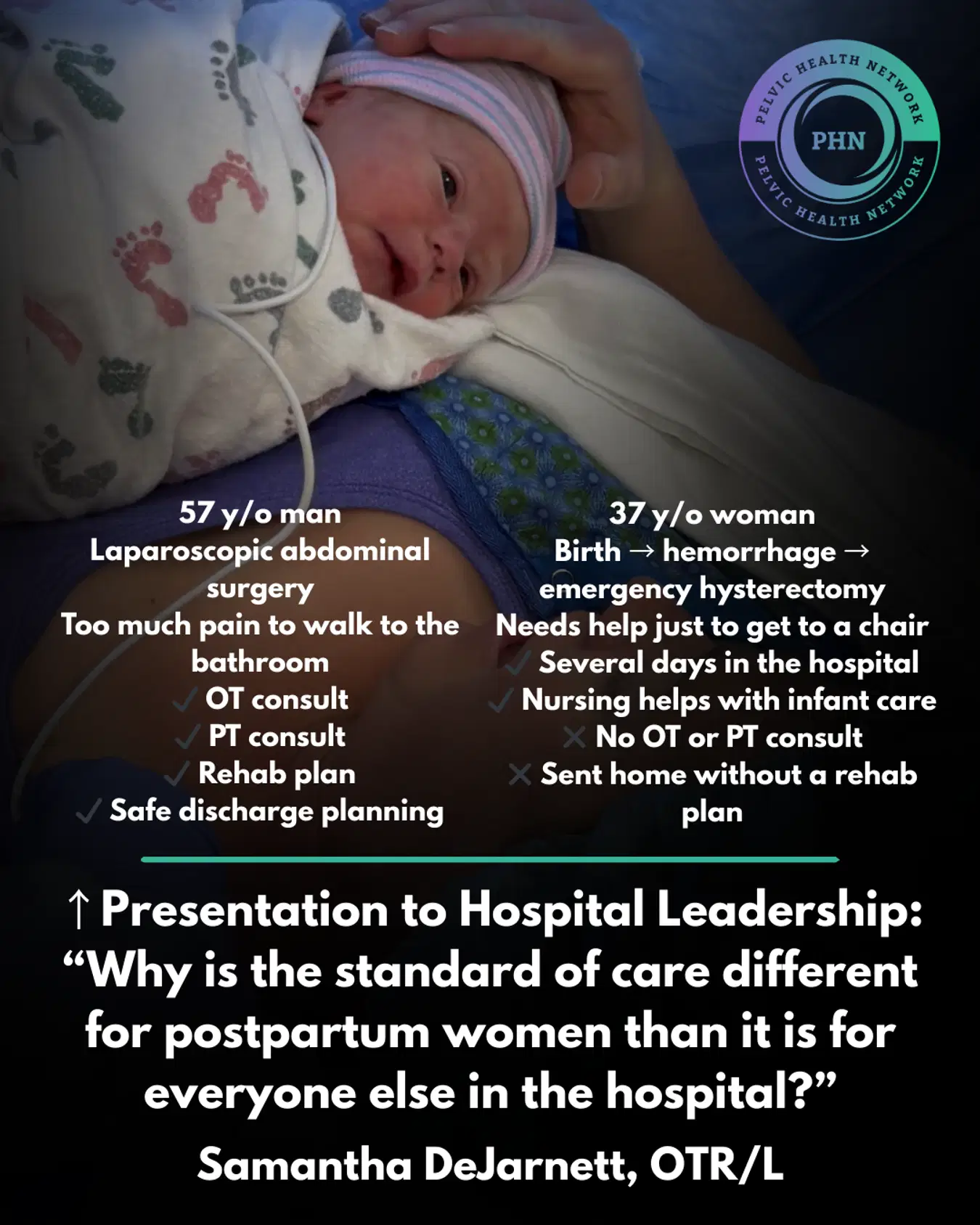
In contrast, consider the experience of a patient after a complex surgical birth or major pelvic surgery. Despite the profound anatomical and functional shift, the medical response often defaults to “watchful waiting.” This disparity highlights a significant gap in women’s health. Dr. Sarah Boyles, Urogynecologist, MD, MPH, URPS, FACOG, FACS, known professionally as “The Women’s Bladder Doctor,” frequently uses the professional athlete analogy to illustrate this inequity. She notes that while sports injuries trigger a high-stakes innovation response, childbirth injuries often result in clinical silence.
The solution lies in a structural shift toward the “Automatic Order Set.” This blueprint moves pelvic health from a reactive referral model to a proactive, standardized system of care. By adopting this model, hospitals can ensure that every patient receives the early clinical rehabilitation they deserve.
The ICF Model: Function Over Diagnosis
At the heart of this shift is the International Classification of Functioning, Disability and Health (ICF). This framework, championed by the World Health Organization, prioritizes a person’s ability to participate in daily life over their medical diagnosis alone. In traditional maternity care, the diagnosis is “postpartum.” However, the ICF model recognizes that birth represents a massive change in physical function.
When clinicians view birth through the ICF lens, they see far more than a healing incision or a shrinking uterus. They see a patient navigating a dense list of high-stakes functional tasks, often within days of delivery. She may be climbing stairs multiple times a day at home. She may be caring not only for a newborn, but also for toddlers or other children who still need lifting, bathing, meals, and transport. In some families, she is traveling to and from the NICU while recovering from major abdominal surgery or significant pelvic trauma. At the same time, she is expected to attend first-week pediatrician appointments, manage her own incision care, monitor bleeding and pain, and recover while providing 24/7 newborn care with little uninterrupted sleep.
Under the ICF model, these demands fill up the chart quickly. Body structures and function are only one part of the picture. Activities and participation tell the rest of the story. Can the patient get in and out of bed without straining her incision? Can she walk long hospital corridors or parking lots? Can she carry an infant car seat, stand at a changing table, or sit comfortably long enough to feed a baby? Can she bend, reach, toilet, bathe, drive, or return to the routines that keep a household functioning? These are not minor tasks. Rather, they are repetitive, physically demanding, and time-sensitive responsibilities that begin almost immediately.
Just as important, the ICF model includes Personal and Environmental Factors. Here, too, postpartum recovery often becomes more complex. Some patients have limited parental leave and face pressure to resume work before their bodies are ready. Others lack a reliable support system at home. Some must recover in housing that requires frequent stair use or long walks from parking to apartment units. Many also face insurance coverage hurdles that delay therapy, limit visit counts, or create confusion about what services are available. Consequently, the functional load grows heavier precisely when physical capacity is most reduced.
Seen this way, birth recovery is not a minimal event that can be managed with generic discharge instructions and watchful waiting. It is a complex, athletic-level transition in function, endurance, mobility, and daily performance. Therefore, the need for physical and occupational therapy is not dependent on a single complication. Instead, it is a logical requirement for patients moving through one of the most demanding recovery periods in medicine. That is precisely why an automatic rehab blueprint belongs in postpartum and pelvic surgical care.

The Orthopedic Machine vs. The Pelvic Gap
The orthopedic world operates like a well-oiled machine. If a patient undergoes a total knee replacement, the system does not wait for the patient to complain of dysfunction to initiate therapy. The order for a physical therapy consult is built into the surgical protocol. It’s automatic. This standardization ensures that no patient falls through the cracks and that outcomes remain consistent.
Pelvic health currently lacks this systemic automation. Most postpartum patients are discharged with instructions to “take it easy” for six weeks. This period of “watchful waiting” often allows minor dysfunctions to become chronic conditions. By the time a patient receives a referral for pelvic floor therapy months later, the window for early, effective intervention has closed. Notably, the lack of early rehab contributes to long-term disability and increased healthcare costs.
Dr. Karin Fox and the power of the automatic order set
Innovation often requires a champion who is willing to challenge the status quo. Dr. Karin Fox, MD, MEd, FACOG, FAIUM, a specialist in high-risk obstetrics, provides a powerful example of this leadership. Dr. Fox manages cases of Placenta accreta spectrum, a life-threatening condition where the placenta attaches too deeply to the uterine wall. These surgeries are incredibly complex. While some of her most difficult cases have lasted as long as 13 hours, the average duration is 3 to 4 hours and involves multidisciplinary teams.
Dr. Fox recognized that these patients face an uphill battle in recovery. Consequently, she implemented an automatic order set specifically for complex surgical deliveries. In her model, the moment a patient is scheduled for an Accreta delivery, the system triggers a series of events. This includes early mobilization protocols and automatic consults with pelvic health specialists.
By automating the process, Dr. Fox removes the burden of “remembering” to refer. The system does the work. This ensures that even the most complex surgical patients receive the functional support they need from day one. Her work demonstrates that when pelvic health is integrated into the surgical blueprint, the results are transformative for both the patient and the hospital.
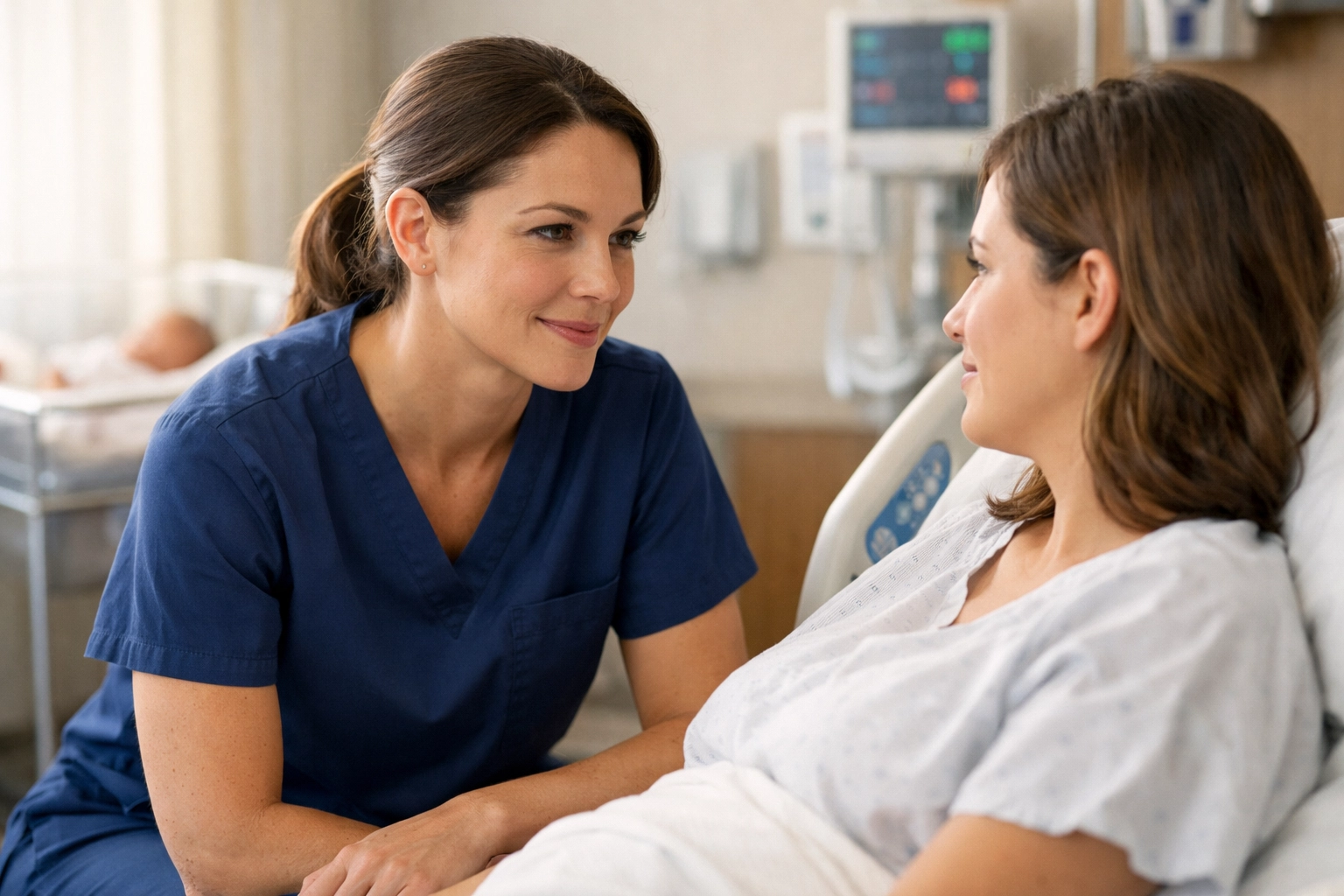
“You’re not just here for my baby?” The automatic order champions direct engagement with a physical therapist or occupational therapist on the maternity unit for patient-centered care that is unique to the context and functional needs of the mother and her family.
Economic Evidence: Duke University Hospital
While the clinical benefits of early pelvic health intervention are clear, the financial implications are equally compelling. Hospital administrators often hesitate to add services due to perceived costs. However, the data from Duke University Hospital suggests that early rehab intervention is actually a cost-saving measure after birth.
Duke University Hospital introduced a program that integrated physical therapy into the early stages of recovery for new parents. This included both in-person sessions in the maternity unit and telehealth follow-ups. Within just 18 months, the hospital reported a savings of $500,000.
These savings stemmed from several factors. Early intervention reduced the length of hospital stays. It lowered the rate of readmissions for complications like wound infections or uncontrolled pain. Furthermore, it decreased the long-term reliance on expensive specialists by addressing functional issues before they became chronic. For hospital leadership, the Duke case provides a clear mandate: early pelvic health is not just good medicine; it is good business.

The University of Michigan Model: The Second-Week Standard
Another blueprint for success comes from the Healthy Healing After Delivery Program at the University of Michigan. Their model focuses on the “second-week follow-up.” In traditional practice, the first postpartum check-up occurs at six weeks. This creates a massive “care desert” during the most critical phase of physical recovery.
The University of Michigan model bridges this gap. By bringing patients back or checking in via telehealth within the first two weeks, clinicians can identify early signs of pelvic floor dysfunction, diastasis recti, or mobility issues. This early touchpoint allows for immediate course correction. When combined with the automatic order set used by Dr. Fox, this model creates a continuous chain of care that supports the patient from the operating room to their return to daily life.
Standardizing Innovation Across Systems
The goal of Pelvic Health Network is to scale these individual success stories into a national standard. We advocate for the adoption of the automatic order set across all maternity and pelvic surgery units. This requires a shift in how hospital systems are designed. It means moving away from a “diagnosis-driven” culture and moving toward a “patient-centered” culture.
When therapy is an integrated part of the surgical or birth protocol, it becomes a baseline expectation. This standardization reduces healthcare disparities. It ensures that every patient, regardless of their background or their ability to self-advocate, receives the same high level of care.
A Call for Leadership
To realize this vision, we need visionary leaders in hospital administration and clinical departments. Implementing an automatic order set requires collaboration between OB/GYNs, surgeons, nurses, and rehabilitation specialists. It requires a commitment to the ICF model and a willingness to invest in early intervention.
Pelvic Health Network provides the resources and the directory to help systems make this transition. You can view the growing list of facilities leading this change by visiting our hospital directory. These institutions are proving that the orthopedic model of care is not just for athletes. It’s a blueprint that belongs in every maternity unit and pelvic health clinic in the country.
Conclusion: The Future of Participation
The Automatic Order Set is more than a clinical tool. It’s a statement of value. It asserts that a parent’s ability to lift their child without pain is just as important as an athlete’s ability to return to the field. It recognizes that pelvic health is fundamental to human participation and daily function.
As we look toward the future, the “watchful waiting” of the past must be replaced by the “active recovery” of the future. By following the examples of Dr. Fox, the University of Michigan, and Duke University, we can create a healthcare system that finally bridges the pelvic gap. The blueprint exists. Now, it is time to build.