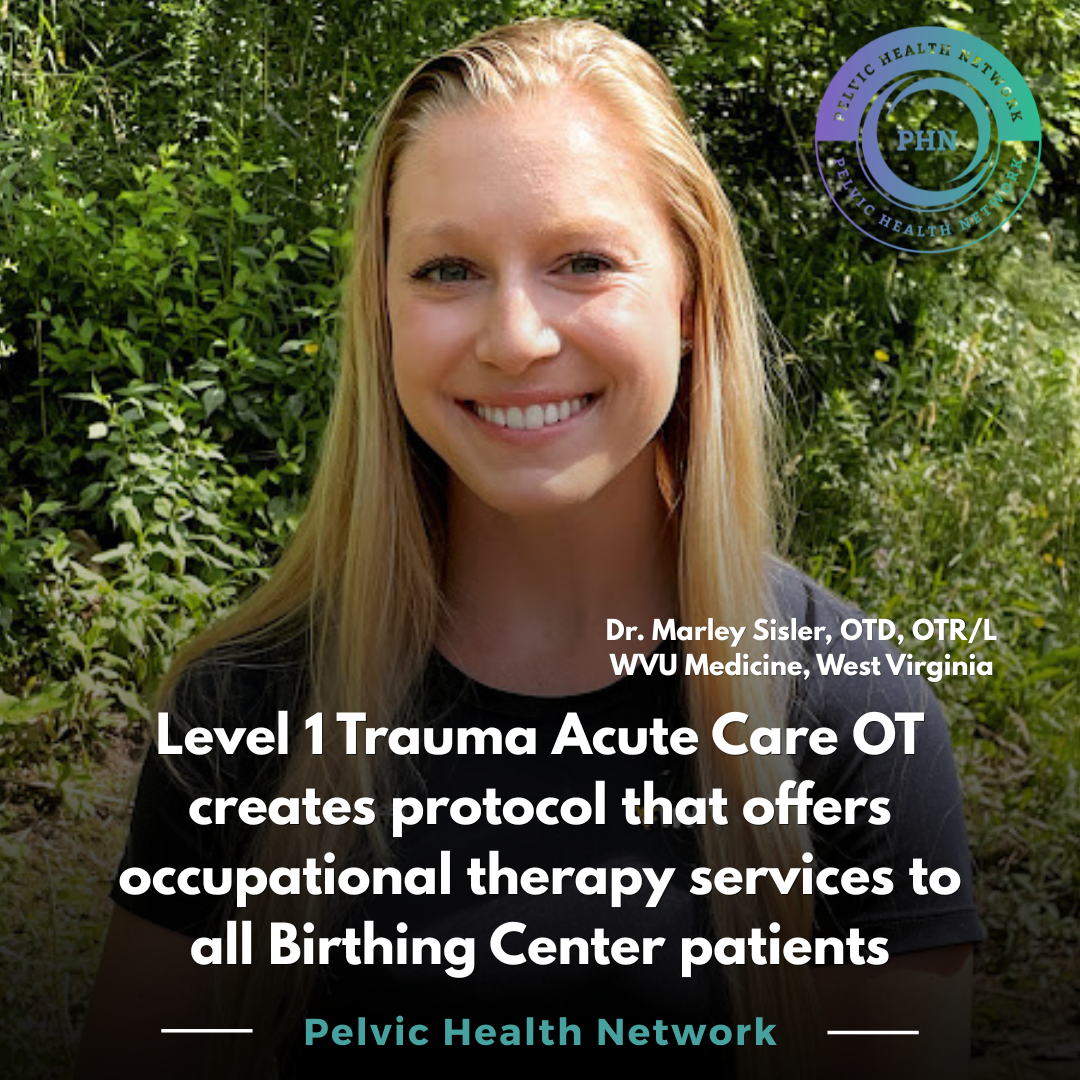
OTD Capstone: Why I Chose Acute Care Maternal Health
Most mothers leave the hospital with instructions for their incision, bleeding, and medications. Few leave knowing whether they can safely care for themselves or their newborn. For her OTD Capstone, Dr. Marley Sisler, OTD, OTR/L decided to ask different questions before discharge: Can this mother safely get in and out of bed after birth or surgery? Can she transfer on and off the toilet without increasing pain or risking injury? Can she bathe, dress, and complete daily activities independently? Can she safely lift, carry, soothe, and feed her baby? Does pain, dizziness, weakness, swelling, or fatigue limit her ability to care for herself or her newborn? Does she understand body mechanics and energy conservation for the first days and weeks after birth? Are there functional barriers that could make recovery more difficult once she gets home? These questions are rarely answered during a routine postpartum discharge, yet they often determine whether a mother feels prepared when she walks out the hospital doors. At WVU Medicine Children's, Dr. Sisler identified this gap and helped develop a program where occupational therapists evaluate every patient admitted to the Birthing Center using a preventive, functional approach beginning on postpartum day one. The goal wasn't to find more problems. The goal was to identify barriers before they become complications, improve a mother's confidence caring for herself and her newborn, and ensure she leaves the hospital with the knowledge and skills needed for recovery at home. As more hospitals look for ways to improve maternal outcomes, reduce preventable complications, and deliver patient-centered care, functional rehabilitation is becoming an important part of the conversation that Marley will be having with us. REGISTER HERE