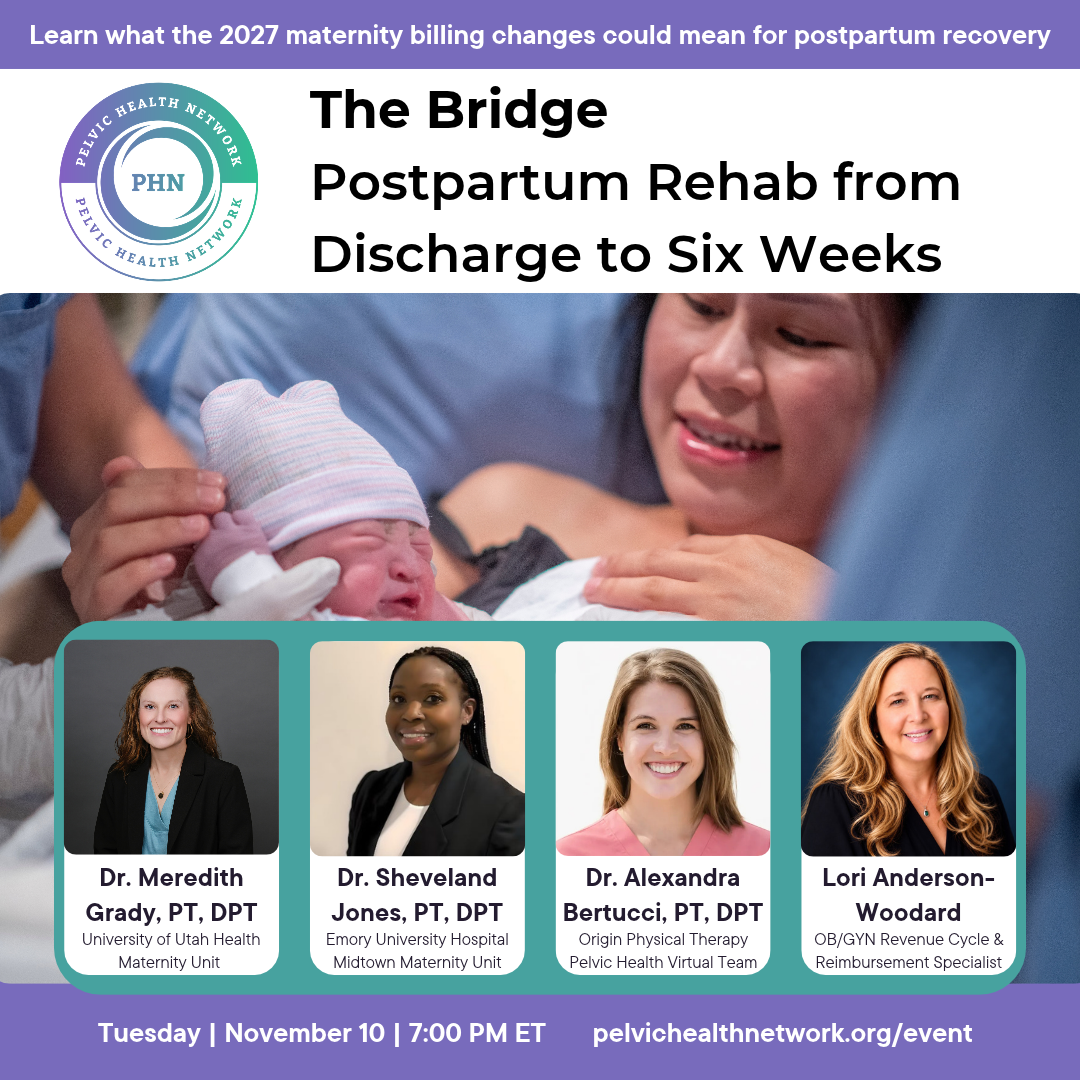
The Bridge: Postpartum Rehab from Discharge to Six Weeks
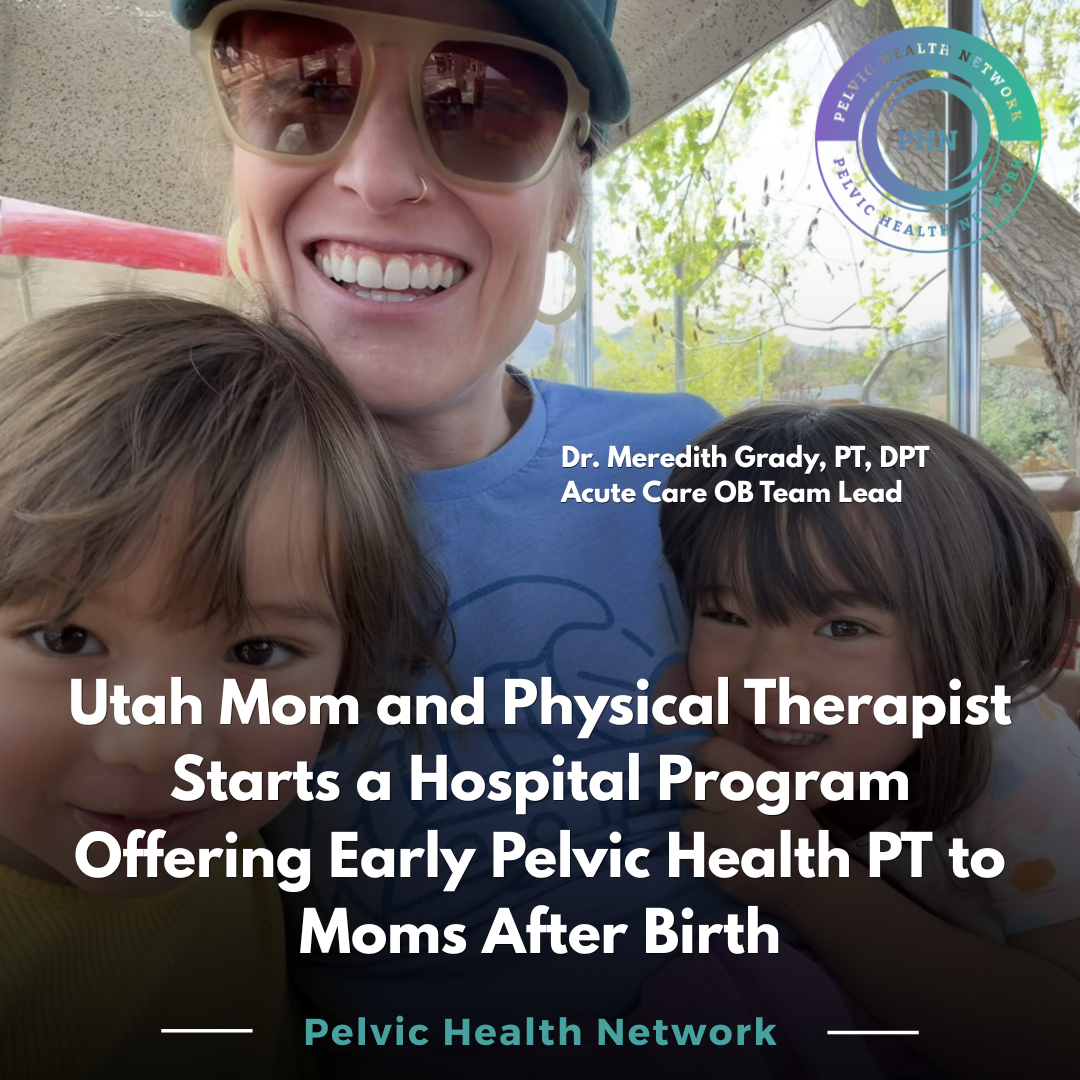
The Bridge: Postpartum Rehab from Discharge to Six Weeks Tuesday, November 10, 2026 | 7:00 PM ET Some hospitals are already supporting moms after discharge, through home programs, telehealth visits, or expedited referrals to outpatient pelvic health clinics. Most of that work is not documented anywhere. The Postpartum Recovery Hospital Directory lists hospitals with OT and PT on the maternity unit, but it does not show what happens next: how soon a patient is seen after Cesarean delivery, levator ani or perineal injury, obstetric nerve palsy, hemorrhage, preeclampsia, tailbone injury or any other complication. This roundtable brings hospital team leaders together to share how they bridge the gap from discharge to early rehab, discuss the barriers to early follow-up care, and look at what the 2027 maternity billing changes could mean for postpartum follow-up. REGISTER HERE About the Speakers Dr. Meredith Grady, PT, DPT, is a pelvic health acute care physical therapist and a mother of two. A hard delivery left her with urinary retention, an unplanned ED visit, and a pudendal nerve injury that took months to heal, so she built the program she had needed. At University of Utah Health, she is the full-time pelvic health PT on the postpartum floor. She sees mothers within 24 to 48 hours of delivery and catches urinary retention, tearing, nerve injuries, and mobility problems before discharge. She earned the role by winning over nurses, building trust with midwives one conversation at a time, and showing a hospital that had never had a PT on this unit that the position was worth keeping. Dr. Sheveland Jones, PT, DPT, is an acute care physical therapist and rehabilitation leader with more than 16 years of experience. At Emory University Hospital Midtown, she joined a hospital-wide quality improvement initiative with the Mother-Baby Unit and saw what antepartum and postpartum patients needed. She then wrote educational presentations, clinical competencies, and a rehabilitation handbook for therapists treating this population. Her commitment is personal, shaped by her own childbirth experience. She has taken part in the Georgia Women in Policy Institute, volunteered with Light After Nine, completed CAPP-OB training, and passed the case study. Her goal is for inpatient obstetric physical therapy to be recognized as an essential part of maternal healthcare. Dr. Alexandra Bertucci, PT, DPT, is a board-certified women’s health physical therapist and an AASECT Certified Sexuality Counselor. She provides virtual physical therapy through pregnancy and into postpartum, with a focus on birth preparation and early postpartum recovery. She also supports return to intimacy throughout the postpartum period, addressing the physical and emotional sides of pain with sex and the adjustments that come with new parenthood. As a clinician educator at Origin Physical Therapy, she trains clinicians on pelvic health and early postpartum care. Lori Anderson-Woodard is an OB/GYN revenue cycle and payer reimbursement specialist with more than 32 years of experience in clinical operations, medical coding, practice administration, and physician reimbursement. As a coder, consultant, practice administrator, and business owner, she knows how maternity care is delivered, documented, billed, and paid. She resolves complex claim denials, payer policy questions, coding and billing compliance issues, contract analysis, appeals, and systemic underpayments. Her career began in the United States Air Force. In this presentation for pelvic health physical and occupational therapists, she brings a practice-level view of the coming changes in global maternity coding and what they mean for documentation, billing, and patient costs. REGISTER HERE