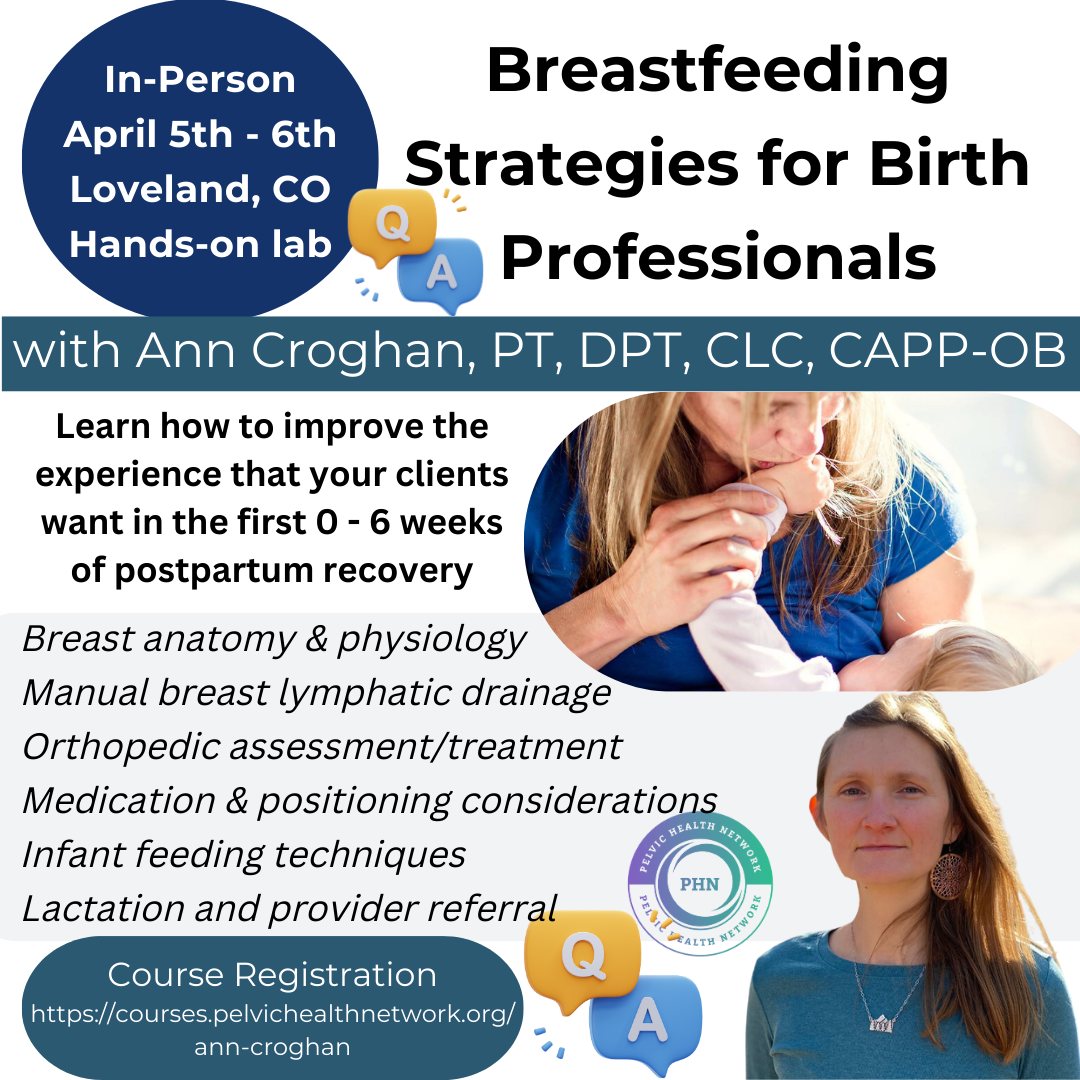
Breastfeeding strategies for birth professionals Q/A
Join our discussion with Dr. Ann Croghan about early intervention strategies that will help breastfeeding function and goals in the first 0 - 6 weeks of postpartum recovery. WATCH HERE
To view the replay of past events, use the calendar feature to go back to the date of the event.
Join our discussion with Dr. Ann Croghan about early intervention strategies that will help breastfeeding function and goals in the first 0 - 6 weeks of postpartum recovery. WATCH HERE
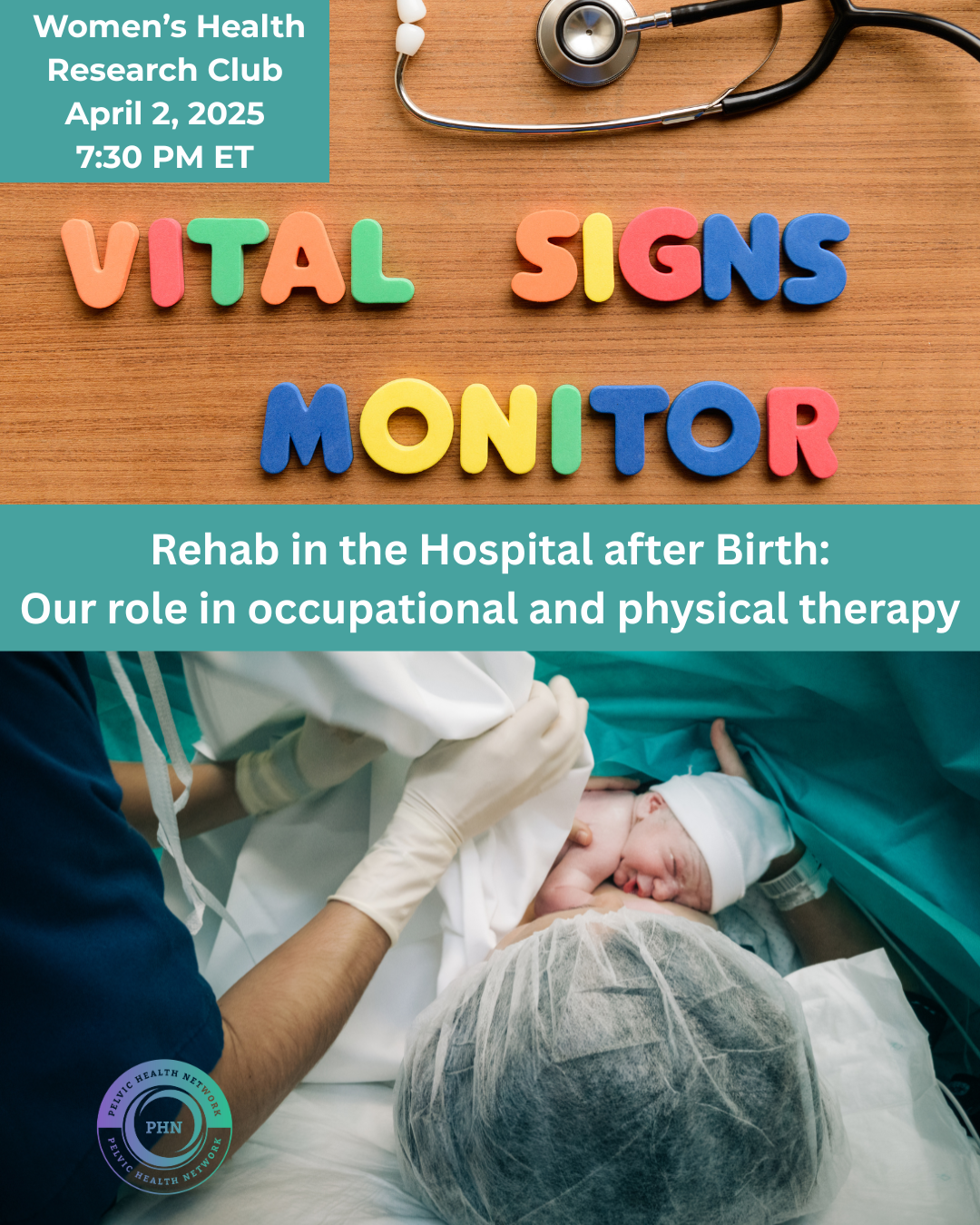
April 2, 2025 In hospitals across the country, rehab therapists routinely monitor vital signs with patients during the activity they are expected to perform at home. Dr. Jennifer Bonia, PT, DPT is an acute care therapist treating patients in the hospital after c-section who inspired this month's inaugural Women's Health Research Club on the use of the Adult Vital Sign Interpretation in Acute Care Guide to expand evidence-based rehab practice on the maternity unit. Join us HERE for a discussion on using this guide for immediate postpartum recovery care on Wednesday, April 2nd at 7:30 PM ET.
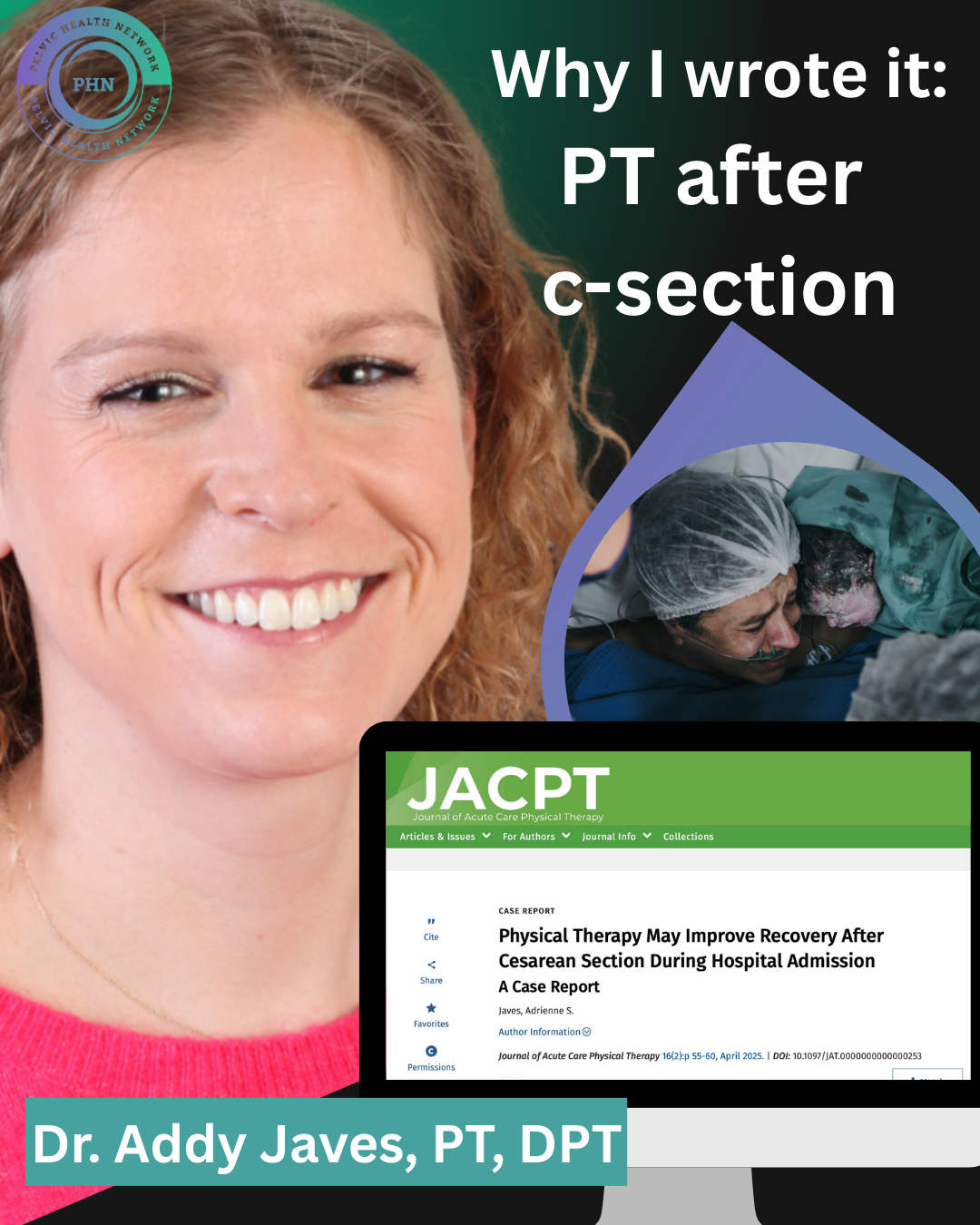
🏥 Postpartum pain has been closely linked with maternal mental health and studies have examined the impact of maternal pain on newborn bonding. 🩺 Dr. Addy Javes, PT, DPT shares her recent case report on the impact that physical therapy has in the hospital after birth on postpartum pain and function to improve maternal outcomes after cesarean section. 🗓️ Join us for an exclusive interview with her on why she wrote about this area of recovery care that’s rarely offered to new moms: Monday, May 12, 2025 at 8 PM ET. Watch the livestream HERE
As interest in maternal and pelvic health continues to rise in both acute care and home health settings, an increasing number of programs and businesses are introducing OT and PT services earlier than traditional standards of care. Join us for a dynamic roundtable discussion featuring occupational and physical therapy students, capstone advisors, and practicing clinicians. Together, they’ll explore how maternal and pelvic health are being redefined across hospital, home, and virtual care environments. REGISTER HERE
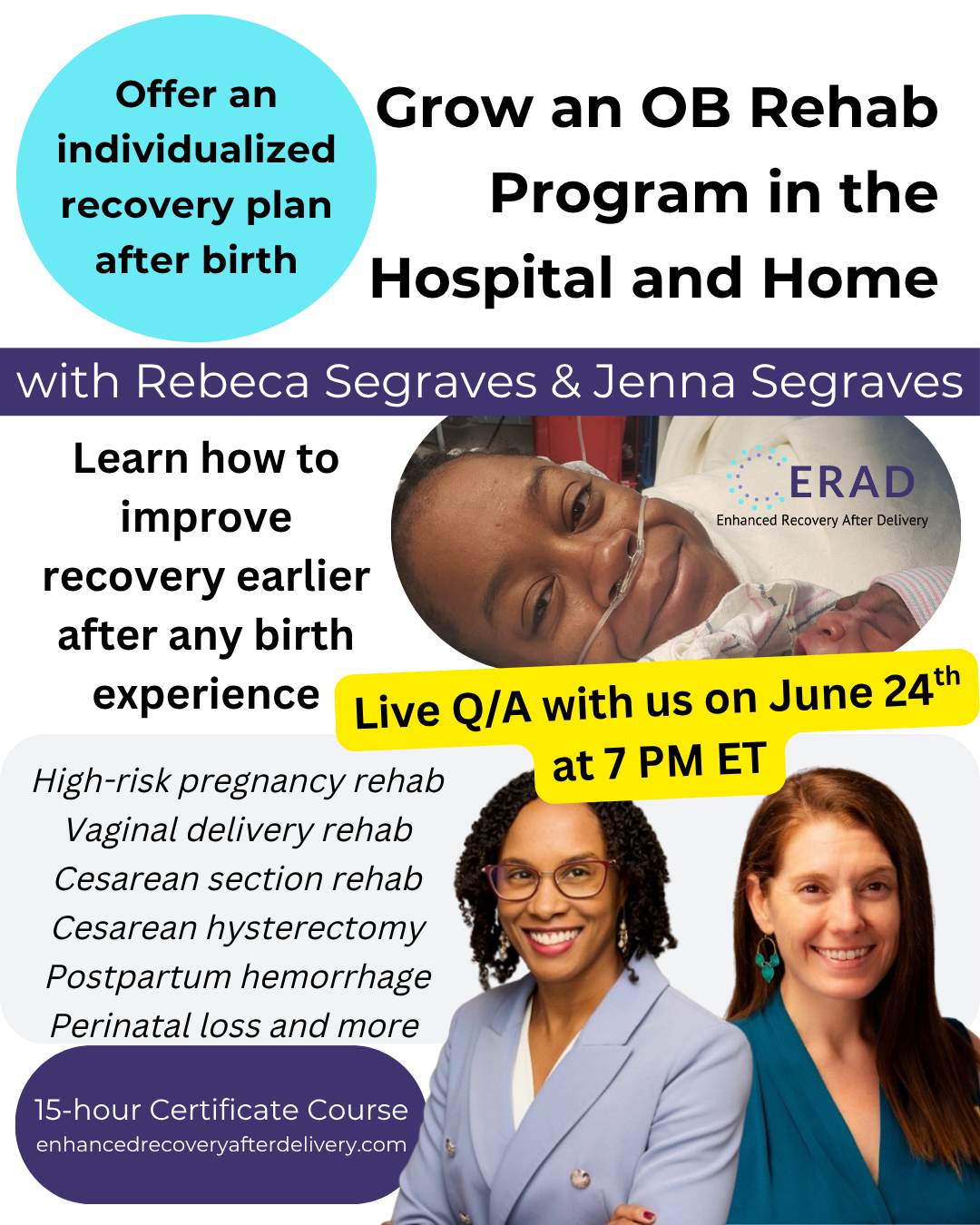
This special Q/A will be open to the public and to Pelvic Health Network members who have specific questions on starting a new service line, business, or hospital-based program that provides acute care, virtual, and home-health services during: pregnancy (including high-risk conditions) and within 0-6 days following any birth experience and pelvic surgery (e.g. hysterectomy, high-degree perineal tear, sterilization, hemorrhage management, and more). We will discuss the upcoming Enhanced Recovery After Delivery training that prepares licensed health providers and birth professionals to expedite maternal health support faster than the current standard of care. This training will be offered via livestream and in-person, providing breakfast, lunch, and a beautiful hike with iconic views of the Pikes Peak region. The training will be professionally recorded for future, self-paced participants while our livestream and in-person participants will master the hands-on techniques that can be started in the hospital and home. Every trainee will have access to a 1:1 meeting with an ERAD instructor that they can request within the 12 months from the start of their training: live or self-paced. This Q/A will answer your questions on whether or not you should continue observing perinatal health practice across all settings OR if you are ready to advance your career and join us at our beautiful headquarters in Colorado Springs on July 19-20, 2025. After this training, you can choose to pursue the Perinatal Health Specialist Certification that is 100% unique to this specialized area of practice. We can't wait to meet you, learn about your mission, and help you succeed! This Q/A will be recorded for members of Pelvic Health Network where memberships directly support program and professional development to advance early interventions in acute care, home health, virtual practice, and community-based support for maternal health, women's health, and pelvic health care. REGISTER HERE
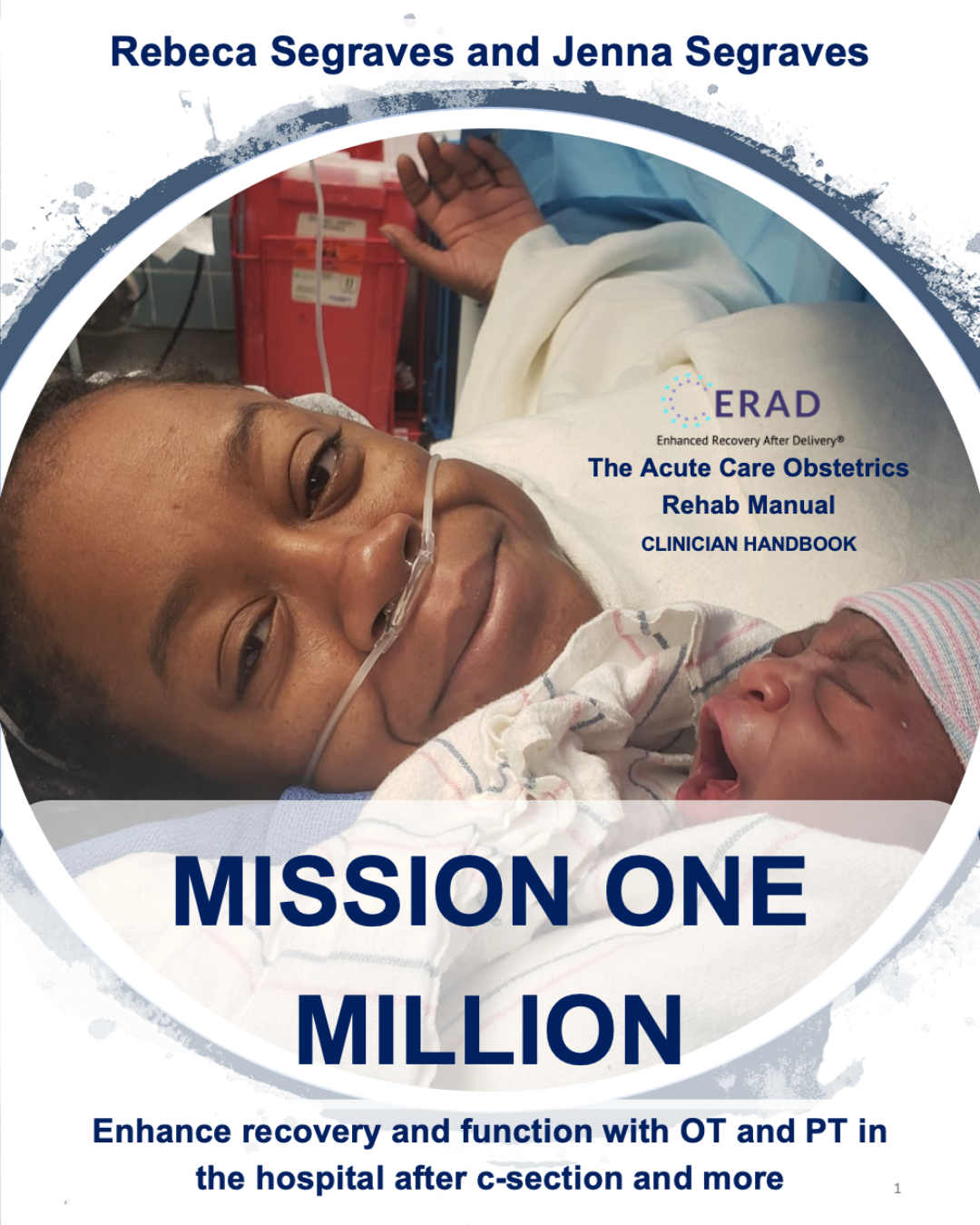
Live Q/A for clinicians establishing rehab services as a standard of care during high-risk pregnancy and within the first 7 days postpartum to enhance recovery after any birth experience. Join us for a review of the Acute Care OB Rehab Manual with Spanish translation updates and resources for acute perinatal rehab program development + an introduction to the simple solution that's filling the gap between hospital and home: the Medbridge Birth Recovery Pathway. Coming September 2025. Register HERE
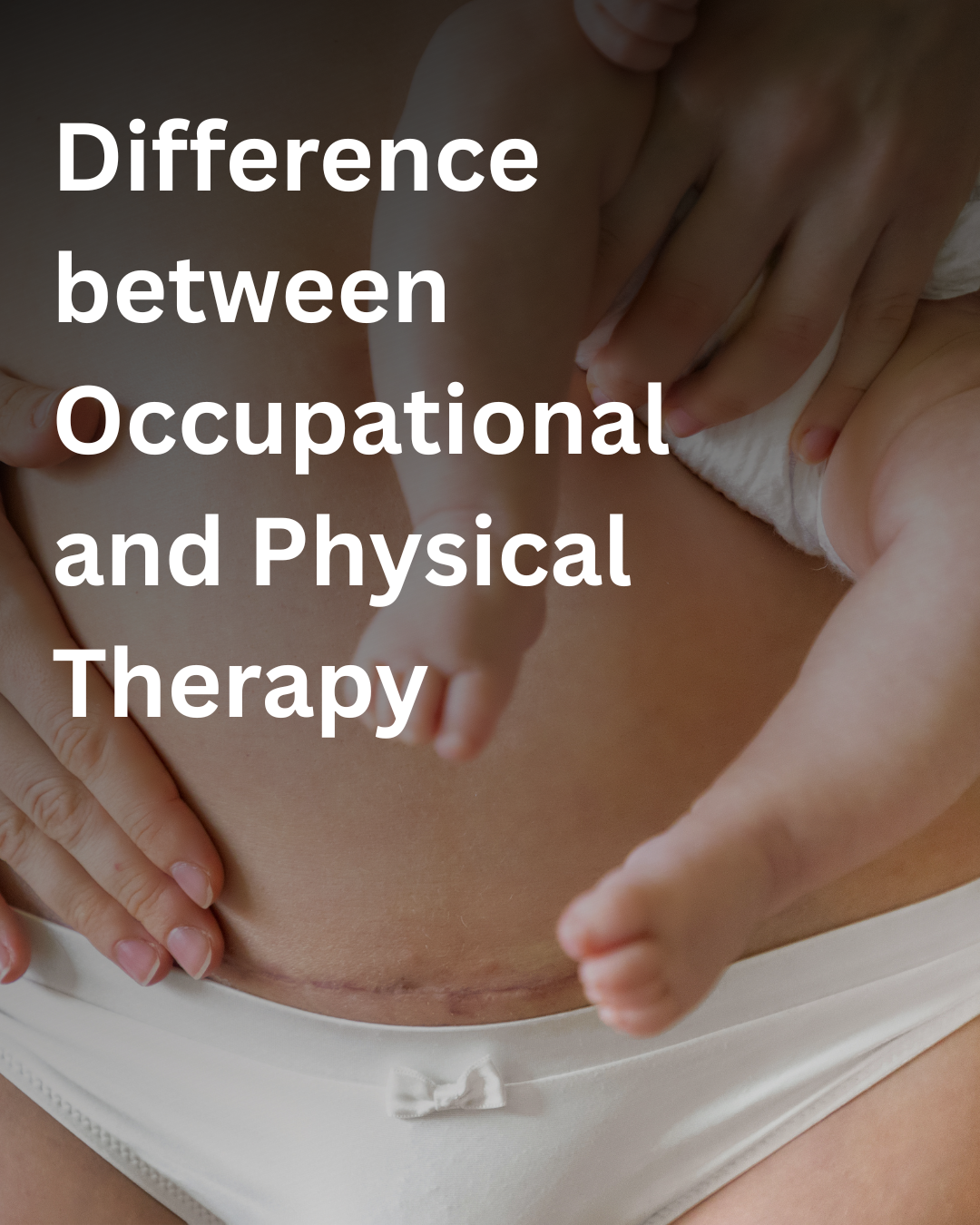
What is the difference between occupational therapy and physical therapy in maternal care? This is one of the most common questions we hear from providers, students, and hospital teams every year. The answer matters as maternal rehab becomes a greater priority in hospitals, clinics, telehealth, and home-based care. In this live panel discussion, experienced OTs and PTs will share how their roles overlap and where they are distinct in supporting recovery during pregnancy and after birth, including postpartum complications and Cesarean recovery. We will explore case examples from acute care, home health, and outpatient settings, and discuss how both professions can collaborate to improve function, safety, and quality of life for mothers. What you will learn: The scope of OT vs PT practice in maternal health Key similarities and differences in evaluation and treatment approaches How interprofessional collaboration improves recovery outcomes Real-world examples from hospital to home Bring your questions for a lively Q&A. Whether you are a provider, student, or administrator, this session will give you clarity on the unique and complementary roles of OT and PT in maternal care. REGISTER HERE
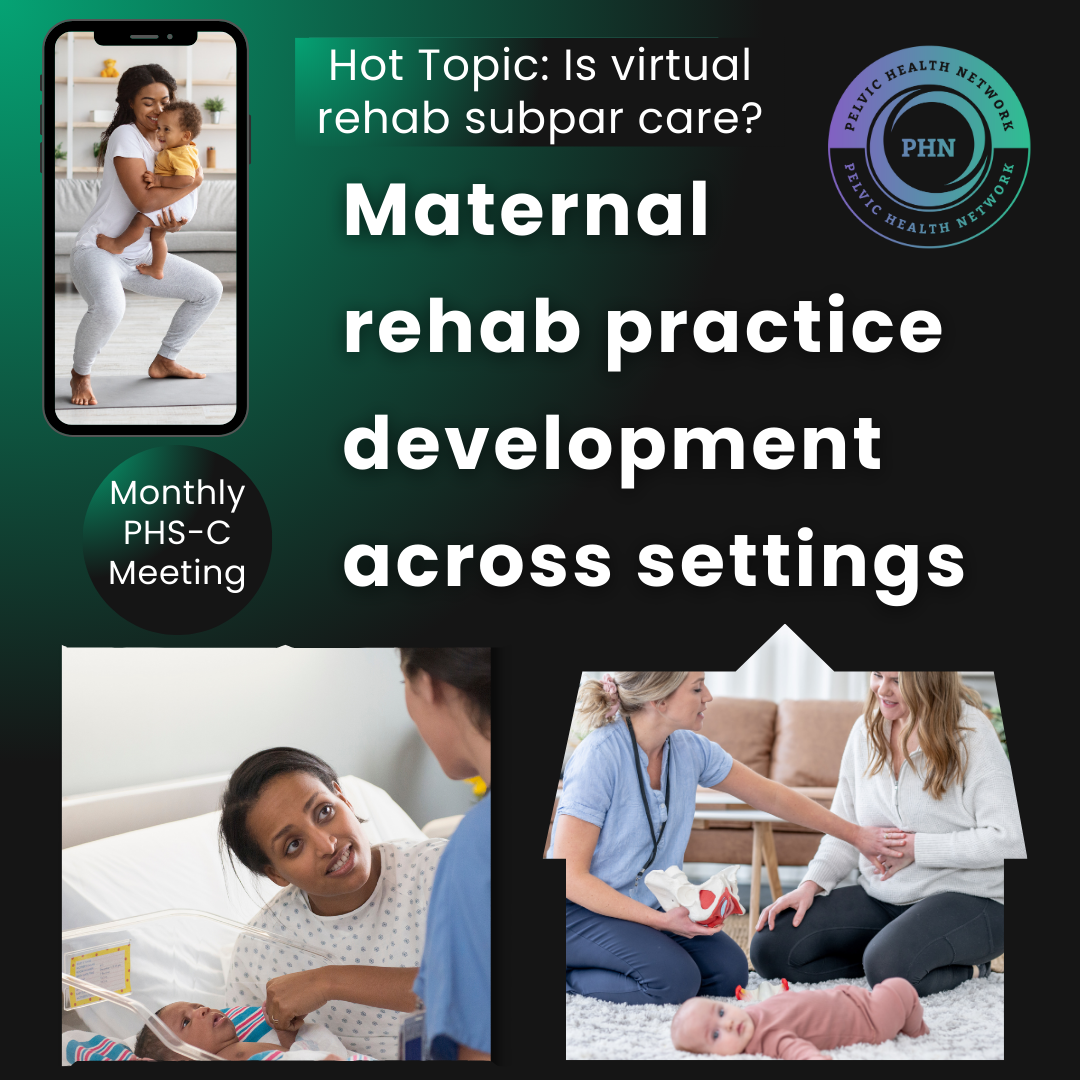
Some clinicians believe that any rehab setting outside of an outpatient women’s health clinic provides subpar care to mothers during pregnancy and after birth. But what happens when hospitalists, OB/GYNs, nurses, and other maternal health providers recognize the value of having a rehab professional on their care team during a high-risk pregnancy admission, or when a new mother is experiencing functional impairments before hospital discharge? What do you do when local providers want to start offering rehab services in the home within the first weeks of postpartum recovery, while mothers are still healing and bonding with their newborn? How do you respond when your hospital system wants to extend perinatal triage services through telehealth rehab to reduce postpartum readmissions and connect patients to earlier guidance on mobility and recovery? Would you say, “No. Refer your patients to me when they’re ready for outpatient women’s health rehab.” Of course not. In our monthly meeting, designed for Perinatal Health Specialist Certification members, we will answer live questions on how to build maternal rehab services across diverse settings to meet patients across the continuum of care and improve maternal health outcomes earlier than the current standard. Topics will include how to identify the right setting for the care a patient is seeking, strategies for building referral networks across disciplines, billing considerations, collaboration with other providers, and practical approaches to improving maternal function and recovery with earlier access to rehab. PHS-C Members: Bring your questions about clinical practice, program assignments, and connect certification objectives with real-life applications. REGISTER HERE

Diastasis Rectus Abdominis training is everywhere. Courses, books, and programs are being sold to both providers and the public. But if that information was enough, why are so many women still confused and stuck in slow recovery? In this episode I talk with Antony Lo, a physiotherapist from Australia who is known for challenging the way we think about abdominal muscle separation. He explains why memorizing anatomy, isolating muscles, changing breathing patterns, and prescribing low-level exercises may not be the best place to start. “By reframing what having DRA means, we have a chance of changing the experience for millions of women.” Antony teaches what that looks like in practice and why simple shifts in how we assess and guide movement can make a huge difference. If you think you already know everything about DRA, this conversation will push you to look again. And when his training is offered in your region, you will not want to miss it. Host, Rebeca Segraves, Pelvic Health Network WATCH HERE

💡 What if you could provide your patients with more options for recovery earlier than the standard of care? Across the country, patients recovering from cesarean delivery are sent home without early rehab or movement guidance. For some, even the surgery itself is painful: 11% to 14.6% experience pain during a C-section when anesthesia doesn't work effectively. Many more struggle with preventable pain, fatigue, and loss of function after birth. As surgery recovery professionals, we see how early rehab can change these outcomes. Yet, too often, clinicians are led to believe that "there isn't enough evidence" to support recovery care during the first six weeks after surgical birth. This webinar is an opportunity to change that. Join us to learn how to use evidence-informed tools and strategies that expand the movement choices patients have during pregnancy and early recovery so that every patient can participate in their healing and not just endure it. 📅 From Data to Delivery: Launching Your Virtual Rehab Practice Before and After Birth 🕖 Tuesday, November 4, 2025 at 7 PM ET 🎁 Bonus for Attendees: All registrants will receive an evidence-informed movement guide that includes sample birth preparation and early recovery movements with explanations of their purpose and benefits. The guide helps clinicians expand patient options for movement, autonomy, and participation in recovery. 🩺Purpose with impact: Thirty percent of proceeds will fund research on early rehabilitation after surgical births, including perineal repairs and cesarean deliveries. Research on early rehab after birth will help every clinician who has been told there isn't enough evidence to start sooner. If you're ready to lead the change in how early recovery care after birth begins, join the movement. REGISTER HERE
Who are the leaders advancing early postpartum rehab in U.S. hospitals? On Tuesday, March 3rd, we will meet the clinical leaders behind hospitals that provide occupational and physical therapy services on the maternity unit prior to discharge. This live event will feature representatives from facilities listed in the Postpartum Recovery Hospital Directory, a growing national database of institutions offering inpatient rehabilitation after birth. Each leader will briefly introduce: • Their facility and setting• The structure of their postpartum rehab services• How referrals are generated on the maternity unit• The role of OT and PT in early recovery• Their purpose for building or sustaining these services This event is designed for: • Hospital administrators• Rehabilitation directors• Acute care therapists• OB service line leaders• Home health and outpatient clinicians seeking hospital collaboration We will highlight the 120+ U.S. facilities currently offering OT and PT services after birth and open the door for future panel opportunities as maternity rehab services continue to expand. Thank you for leading early recovery where it begins. REGISTER HERE
Third and fourth degree perineal tears, also known as obstetric anal sphincter injuries (OASIS), can significantly affect bowel function, pain, mobility, and participation in daily activities during the early postpartum period. Despite the functional impact of these injuries, rehabilitation is frequently delayed until the traditional six-week medical clearance, leaving a critical gap in early management. This course examines the clinical rationale for initiating rehabilitation within the first six weeks and outlines evidence-informed assessment and intervention strategies appropriate for acute and early postpartum care. Participants will analyze tissue healing timelines, bowel protection principles, red flag screening, and early mobility considerations specific to severe perineal trauma. Instruction will emphasize functional assessment, symptom-guided progression, and interdisciplinary communication. The course also explores how to adapt early rehabilitation principles across acute care, home health, outpatient, and telehealth settings to support safe recovery and restore participation in meaningful activities while reducing risk of long-term dysfunction. REGISTER HERE
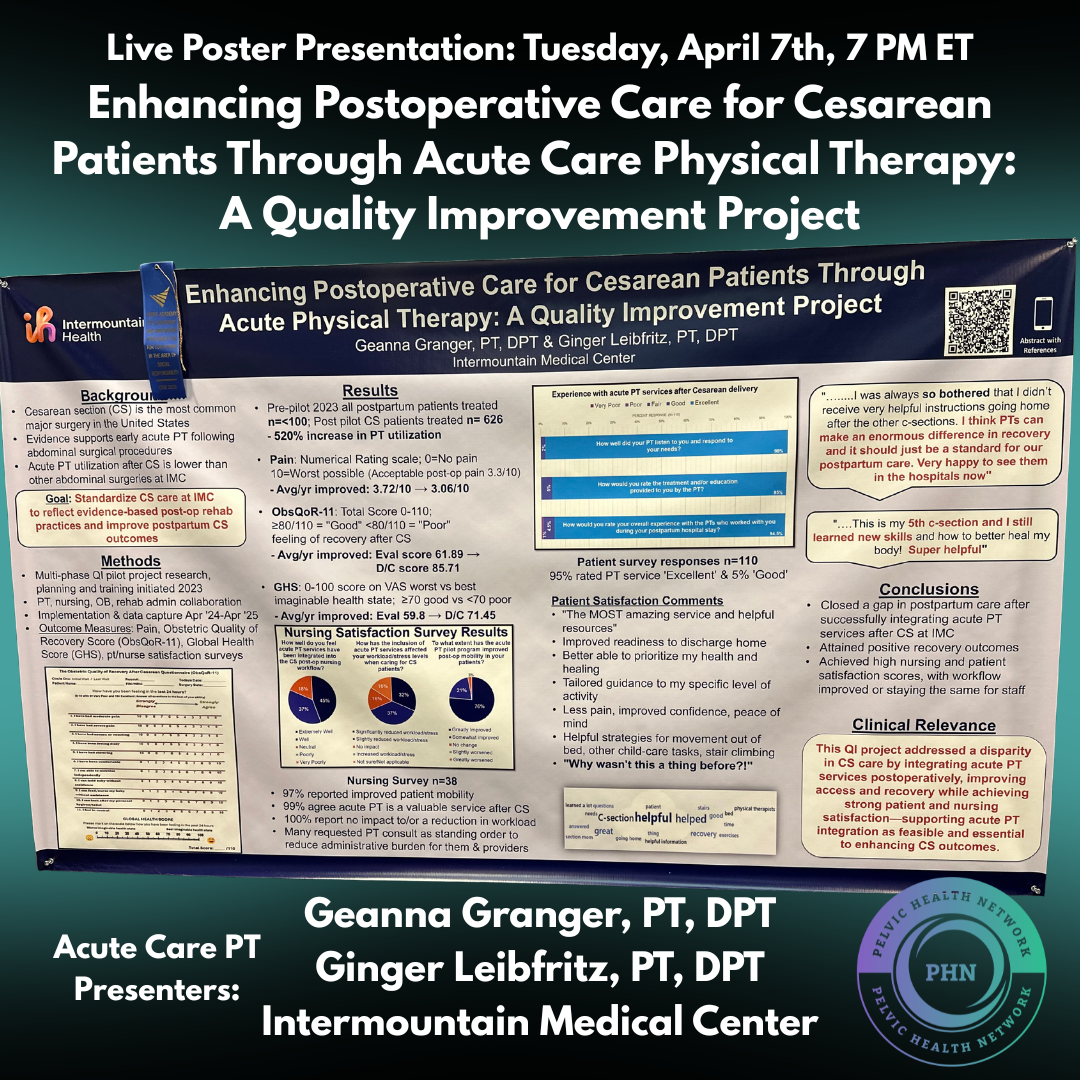
What happens when moms get help recovering after a C-section…before they leave the hospital? At Intermountain Medical Center, physical therapists started seeing patients during their hospital stay, not weeks later, and the difference was clear. Patients shared: • Less pain• More confidence getting up and moving• Feeling more prepared to go home• “Why wasn’t this a thing before?” Nurses saw it too: • Patients moving better• Smoother recovery on the unit• Strong support for making this standard care The results were so strong, the team presented their work at a national conference in 2026. In this session, you’ll hear directly from the team who built the program: • How they made it part of everyday hospital care• What they’re actually doing with patients• What patients and nurses experienced If you’ve been asking why this kind of support isn’t standard after C-section, Dr. Geanna Granger and Dr. Ginger Leibfritz are going to show you what it looks like when it is. Free to attend. Register HERE to join live.
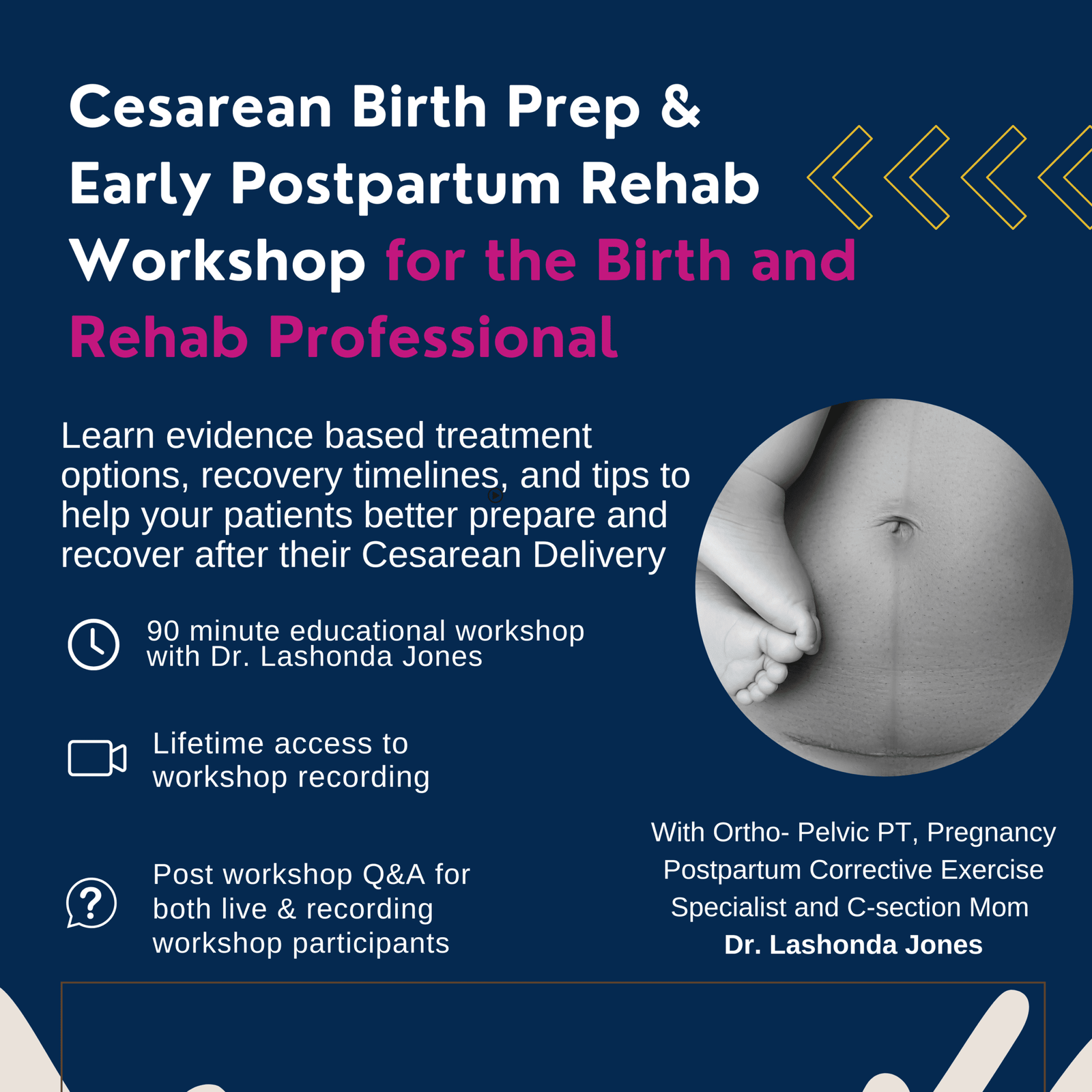
The most important window for recovery after Cesarean birth is the first few weeks after surgery. That’s when patients are getting out of bed, lifting their baby, and trying to move through pain and fatigue while still managing the demands of daily life. They’re getting in and out of a car for the first time after surgery.They’re going to a pediatrician visit within the first week.Some are traveling back and forth to the NICU.They’re navigating stairs, standing long enough to shower, and caring for other children at home. In some cases, they’re recovering from surgery without consistent help or managing newborn care as a single parent. And most of them are doing it without a clear plan. They’re told to “take it easy,” but the guidance is vague and not tailored to the actual demands of their day, so patients are left to figure out on their own how to move, lift, and function in a way that supports healing. This is where recovery starts to break down. Rehabilitation is often delayed or not introduced at all during this early window, even though this is when guidance has the greatest impact on mobility, pain, and return to daily activities. This workshop is designed to help clinicians step into that window with more clarity and confidence. In this 90-minute workshop, you will learn how to support patients before and after Cesarean birth using a structured, timeline-based approach to recovery. We will review how cesarean delivery impacts the abdominal wall and overall function, and how these changes influence movement, activity tolerance, and return to daily tasks. You will leave with practical strategies to guide early mobility, positioning, breathing, and activity progression in the first days and weeks postpartum, along with a clear way to communicate expectations, identify when to refer, and provide education patients can use immediately at home. Expand Your Practice Become the clinician patients and providers trust for early recovery after Cesarean birth Step into a gap in care that is currently underserved in most hospitals and communities Offer guidance during the most critical window of recovery instead of waiting until weeks later Build confidence addressing early postpartum needs, even without a specialty certification Strengthen your role within your team by providing clear, actionable recovery plans Improve patient outcomes by addressing mobility and function when it matters most Differentiate your services by offering structured, timeline-based recovery support Position yourself as a leader in early maternal surgery care within your setting ENROLL HERE
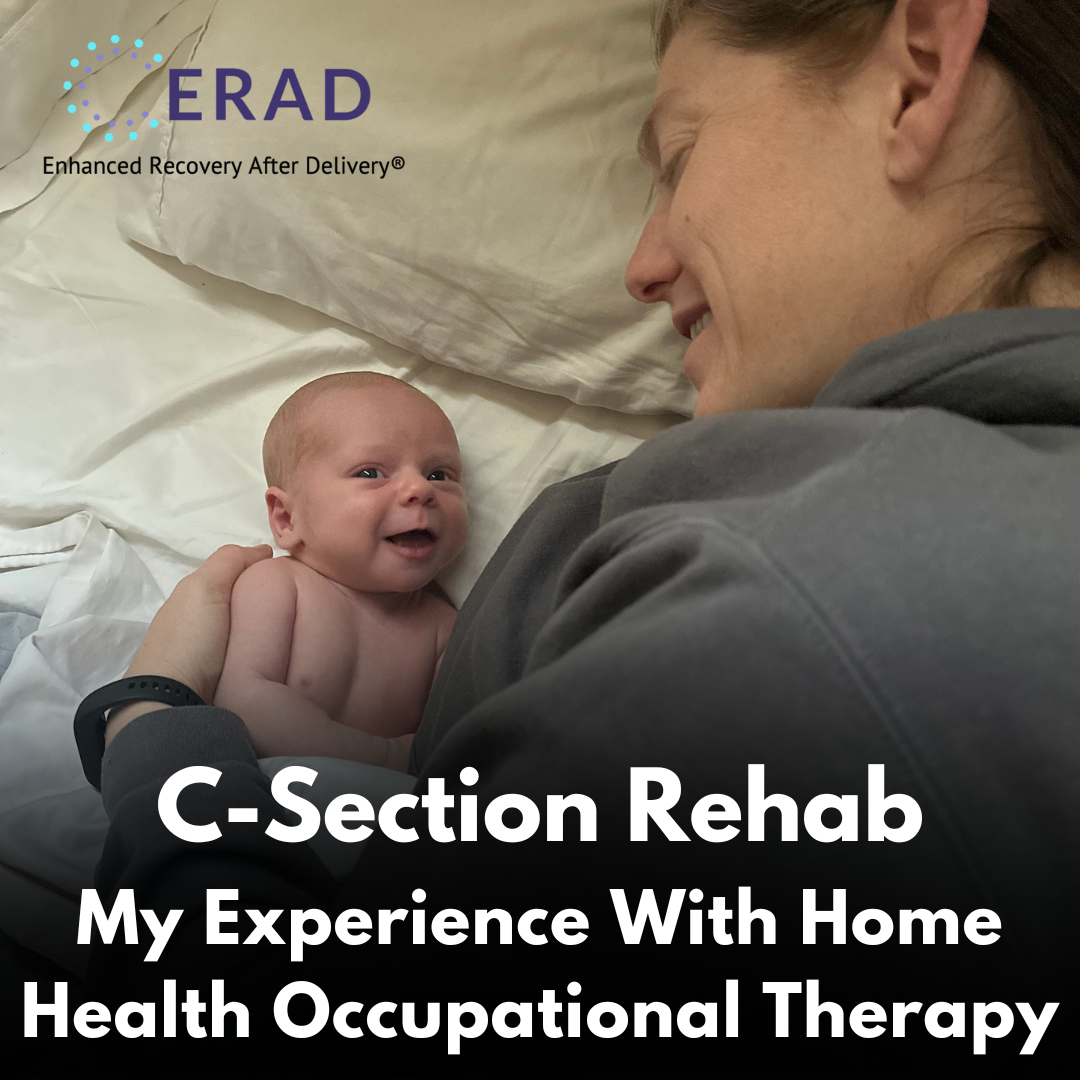
Dr. Jenna Segraves, PT, DPT, NCS shares her experience with home-based OT services after C-section complications Four days after a C-section, Jenna couldn’t lie flat. She was short of breath. She felt pressure in her chest. Her blood pressure had climbed far from her normal. She went to OB triage. Her concerns weren’t taken seriously. She was told to go home and rest. With ongoing chest pressure, she was sent to the main emergency department. While in the ED, her systolic blood pressure rose over 180 and her BNP registered at 1650. She was treated for postpartum fluid overload and acute heart failure. Jenna is an ultra-endurance athlete who knew her baseline well. That didn’t stop this from being missed early. In this session, you’ll see exactly how this unfolded and what was missed, including the role of home health OT in the first few days after Jenna's postpartum readmission. Patients are discharged. Symptoms start. They go back in. They’re told it’s part of recovery. They come back again when things get worse. We’ll talk about what therapists should be paying attention to right away after C-section, what patients are dealing with at home, and where rehab fits in before complications escalate. If you work in acute care, home health, or outpatient, this will give you a clearer picture of what happens after discharge and what early intervention can look like in practice. REGISTER HERE
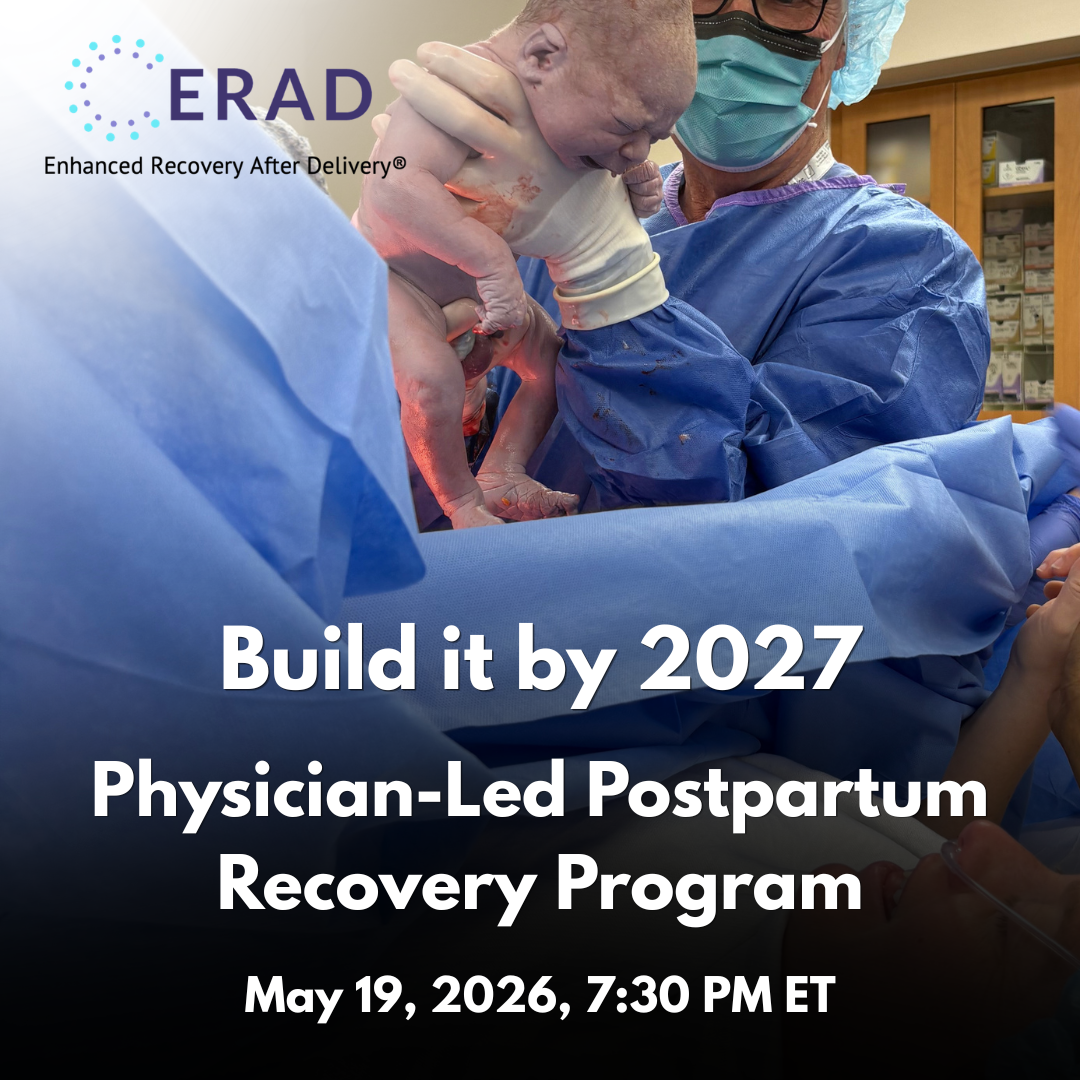
Duke University Health System saved over $815,000 in 24 months by adding physical therapy to their maternity unit and via telehealth. The program could not have launched without a physician order. 127 maternity units in the United States currently offer occupational and physical therapy during postpartum admission. The hospitals reducing postpartum readmissions fastest have one thing in common: a physician who decided to build a recovery team. This session is designed for OBGYNs, MFMs, and OB hospitalists who want to understand how a postpartum recovery program works, what it requires of the physician, and how to build one inside their own health system before 2027. You will leave this session with: 1. A clinical algorithm and outcome measures for identifying postpartum patients who would benefit from rehabilitation during hospital admission or through telehealth and home health follow-up after discharge. 2. Rehab practice guidelines that include assessing physiological response to activity after hemorrhage, Cesarean hysterectomy, preeclampsia, and other major birth events. 3. Program outcomes that address the metrics that payors and health systems measure including length of stay, patient satisfaction scores, preventable complications, and avoidable readmissions. Presented by: Rebeca Segraves, PT, DPT, PWCS | Founder, Enhanced Recovery After Delivery®. Developer of the only global directory that tracks inpatient postpartum recovery programs across maternity hospitals. Dr. Katherine Sylvester, PT, DPT | Founder, MommyMonitor. Acute care women's health physical therapist and remote postpartum monitoring specialist. This session is free. It is built for the physician who already suspects something is missing in the recovery window between discharge and the six week visit and wants to do something about it. Register to attend live or receive the recording. REGISTER HERE
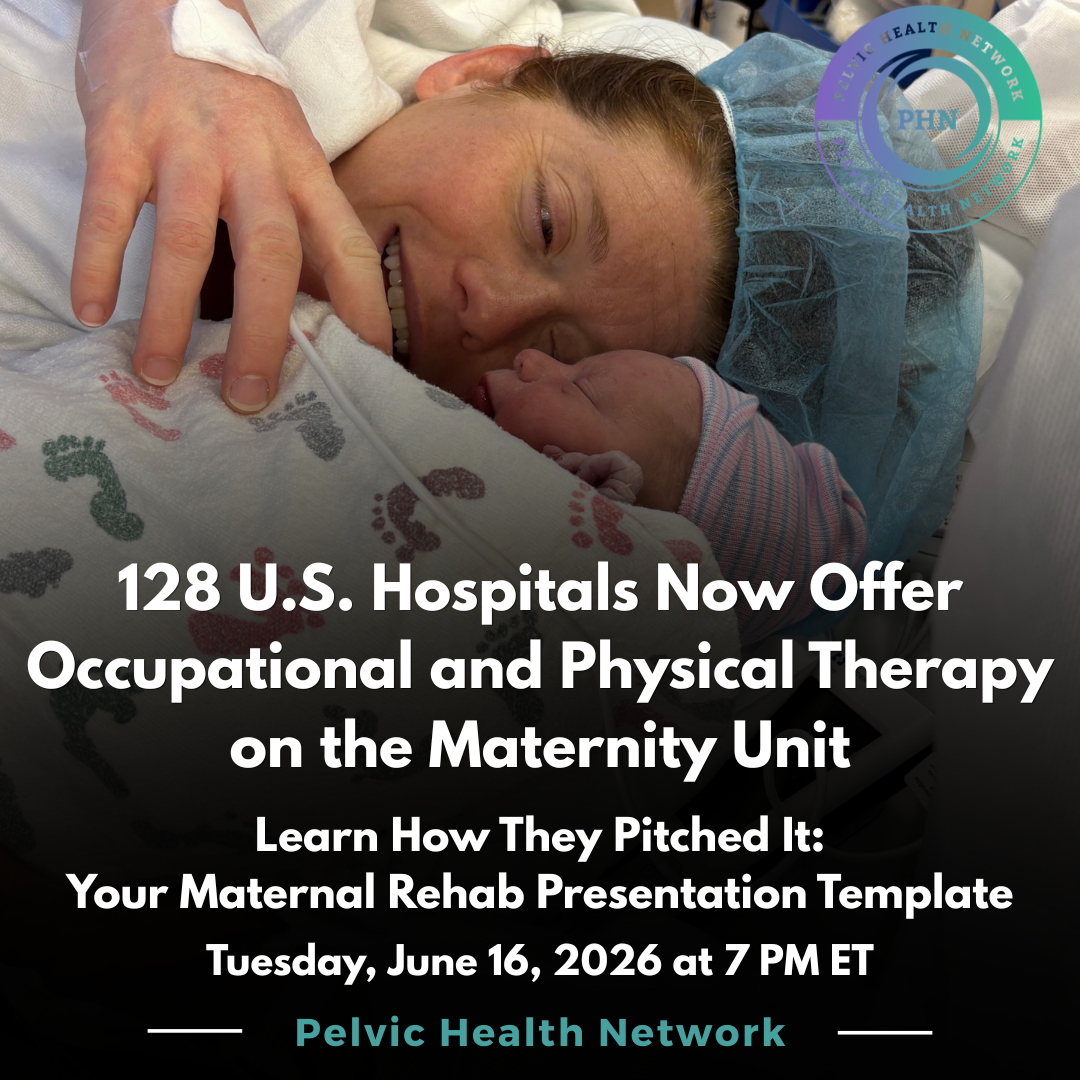
I was in a Zoom meeting with the lead OT and PT of the acute care maternal rehab program at one of the leading academic medical centers in the U.S. They were explaining how they started a service line that offers rehab to mothers during hospital admission after birth when they noticed another need: OB nurses wanted to learn what they were teaching patients in the hospital room with their anatomical pelvic model. During a treatment session, a nurse had observed the therapist use the pelvic model with a new mom after a perineal tear and discuss the pelvic health treatment plan she created for her. The nurse left the room and when the therapist ended her session, she was met with a team of OB nurses at the nurse's station on the mother baby unit. They wanted to see the pelvic model and learn the pelvic floor education that the therapists were providing to women after vaginal delivery before discharge. What started as an acute care maternal rehab program expanded into an interdisciplinary postpartum recovery model led by occupational therapists, physical therapists, OB nurses, and OB/GYNs. The Pelvic Health Network's Postpartum Recovery Hospital Directory tracks 128 facilities that offer rehab services on the maternity unit. These programs have quickly grown into a movement that is expanding access to early recovery care after birth in hospitals, home health, outpatient clinics, and virtual care. In every setting where a therapist was willing to build the referral pathway, clinicians have learned the fundamental skill that gets buy-in from the maternal care team: how to communicate the value to mothers earlier after birth. In our workshop on Tuesday, June 16 at 7 PM ET, therapists will receive the presentation template to communicate their role, and learn what to include, who to invite, and how to build the case for early maternal rehab in every setting for moms who want access to postpartum recovery care. See you then, Rebeca Segraves, Pelvic Health Network REGISTER HERE
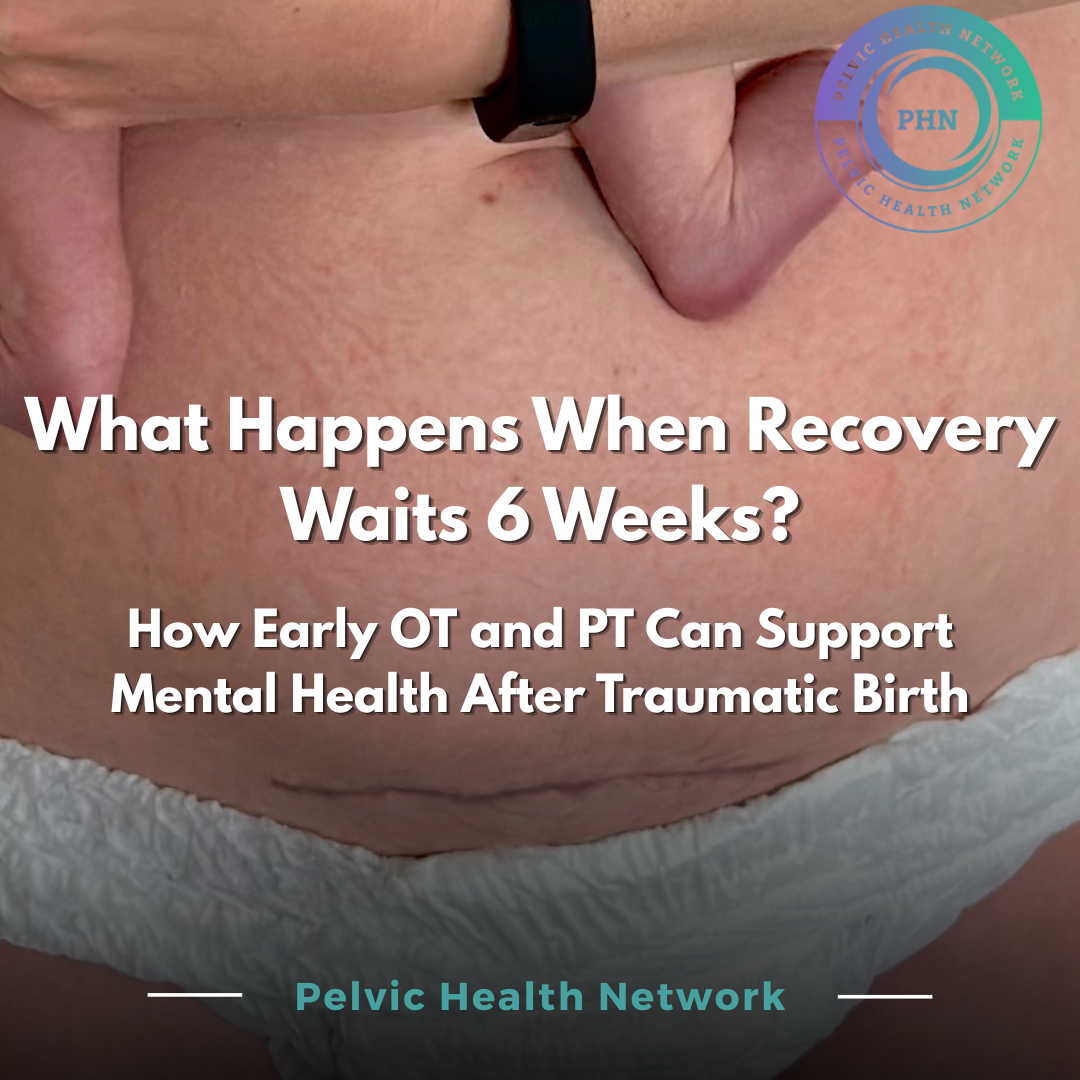
What Happens When Recovery Waits 6 Weeks? How Early OT and PT Can Support Mental Health After Traumatic Birth Most patients after traumatic birth are discharged from the hospital without occupational or physical therapy. If postpartum rehab is recommended at all, they're told to wait six weeks or more. In that early window, the hardest parts of recovery happen alone. Pelvic pressure. Tailbone pain. Incontinence. Neck, back, and shoulder discomfort from hours of feeding. Lactation challenges. Sleep deprivation. Partner fatigue. Hypertension. Uncertainty about what's normal and what isn't. Growing distress that has nowhere to go. 128 hospitals have decided that's not acceptable. From rural to large metropolitan health systems, 128 maternity hospitals offer OT and PT to address functional recovery during postpartum admission. Therapists visit mothers in their room, while holding their baby, with their families present, to develop a recovery plan after an unexpected birth event. Mothers share what they feel is needed before they go home, before questions compound, before complications grow into anxiety that affect their mental health, and before they spend 6 weeks wondering if what they feel is their fault. Join Rebeca Segraves, PT, DPT, PWCS and Jenna Segraves, PT, DPT, NCS, co-founders of Enhanced Recovery After Delivery®, for a live discussion and Q&A on what early OT and PT actually changes for postpartum women. Learn how inpatient and outpatient practitioners and practice owners are building the referral pathways to reach moms sooner. We'll talk about the clinical model, the scheduling structures that work inside and outside of the hospital, and the one thing you can do in your practice to stop waiting for a referral that was never coming. This event is for the therapist who knows this is your pathway to build. If you're watching patients get referred to rehab months after birth, wondering why no one told them sooner, it's time to accept that you're the only clinician who's going to change it. Build something that meets mothers where they actually are. Join Live. REGISTER HERE
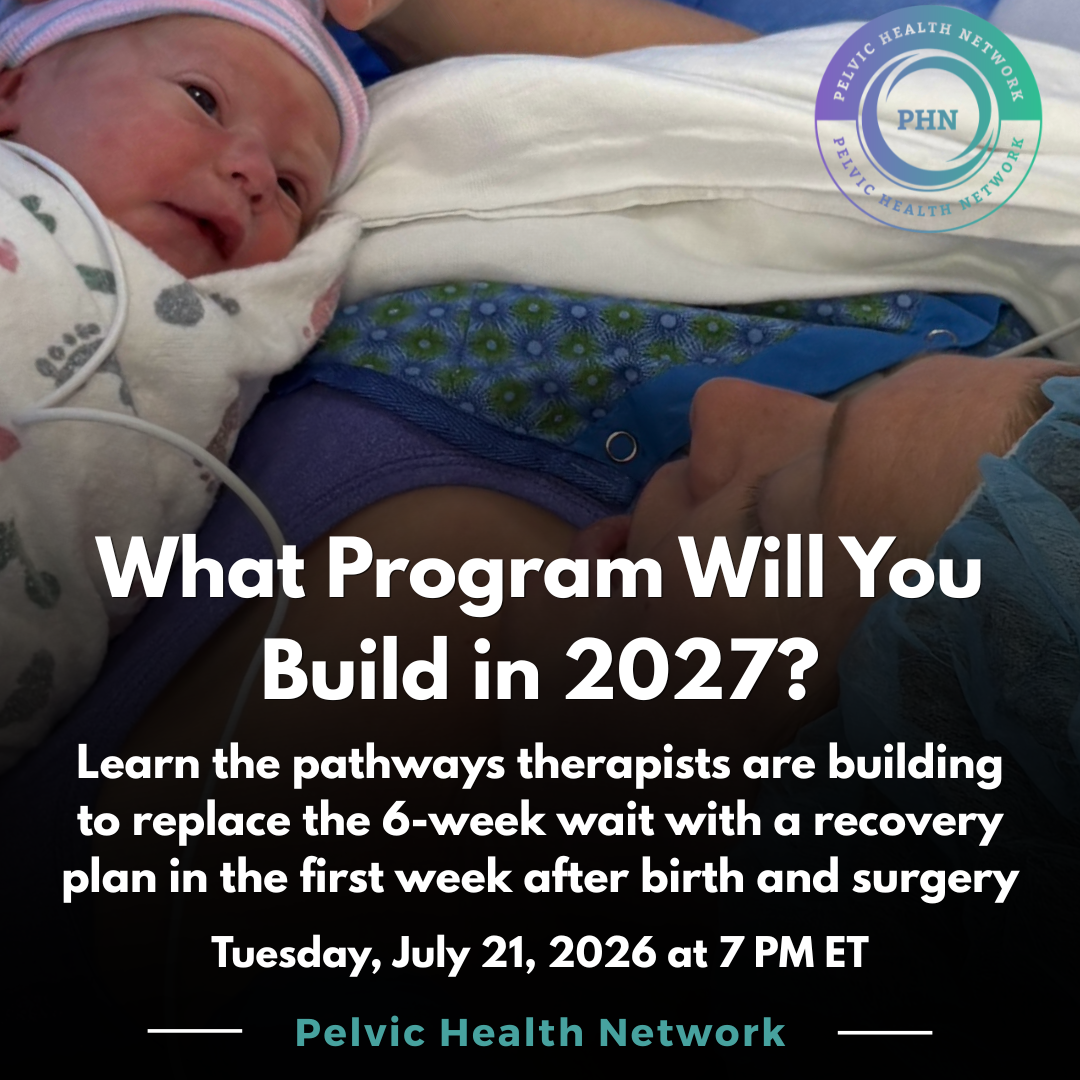
Somewhere in your career, you’ll watch a patient wait weeks for care they needed in the first 48 hours, and you’ll wonder why nobody built a faster way to reach them. That question is where program development starts. During my women’s health physical therapy residency, I watched my residency director build rehab’s presence in a world where we were part of prehab before prostatectomy and part of the first week of recovery after mastectomy, entirely through relationships she spent years building and trust she never stopped earning. When our waitlist was five to six weeks out, she always found a way to get a patient seen sooner. That same health system later reported saving $815,000 in avoided readmission costs across over 8,400 deliveries by offering PT in the hospital and via telehealth after birth. That result started with relationships, one conversation at a time. Program development is a relationship skill before it’s anything else. Before you build one, you have to know what you’re building toward: a pathway for birth recovery, starting in the hospital and following patients home, or a pathway for pelvic surgery more broadly, covering common procedures like hysterectomy for patients who never got automatic referrals the way orthopedic patients do. Both replace the same outdated standard: the 6-week wait built around medical practice, not tissue healing, mental health, or function. This session kicks off our new ERAD cohort and it’s the third in a series that’s followed the arc of building a program from the ground up: first to physicians on leading one, then to therapists on presenting it to their maternal care team, and now to you on deciding what you’re actually building and where to start. We’ll cover how to identify which direction fits your setting and how to build the pathway that gets patients seen in week one instead of week six. You don’t need it figured out before this session. You need to show up with questions on where to begin. See you soon. - Rebeca Segraves, PT, DPT, PWCS Register HERE.
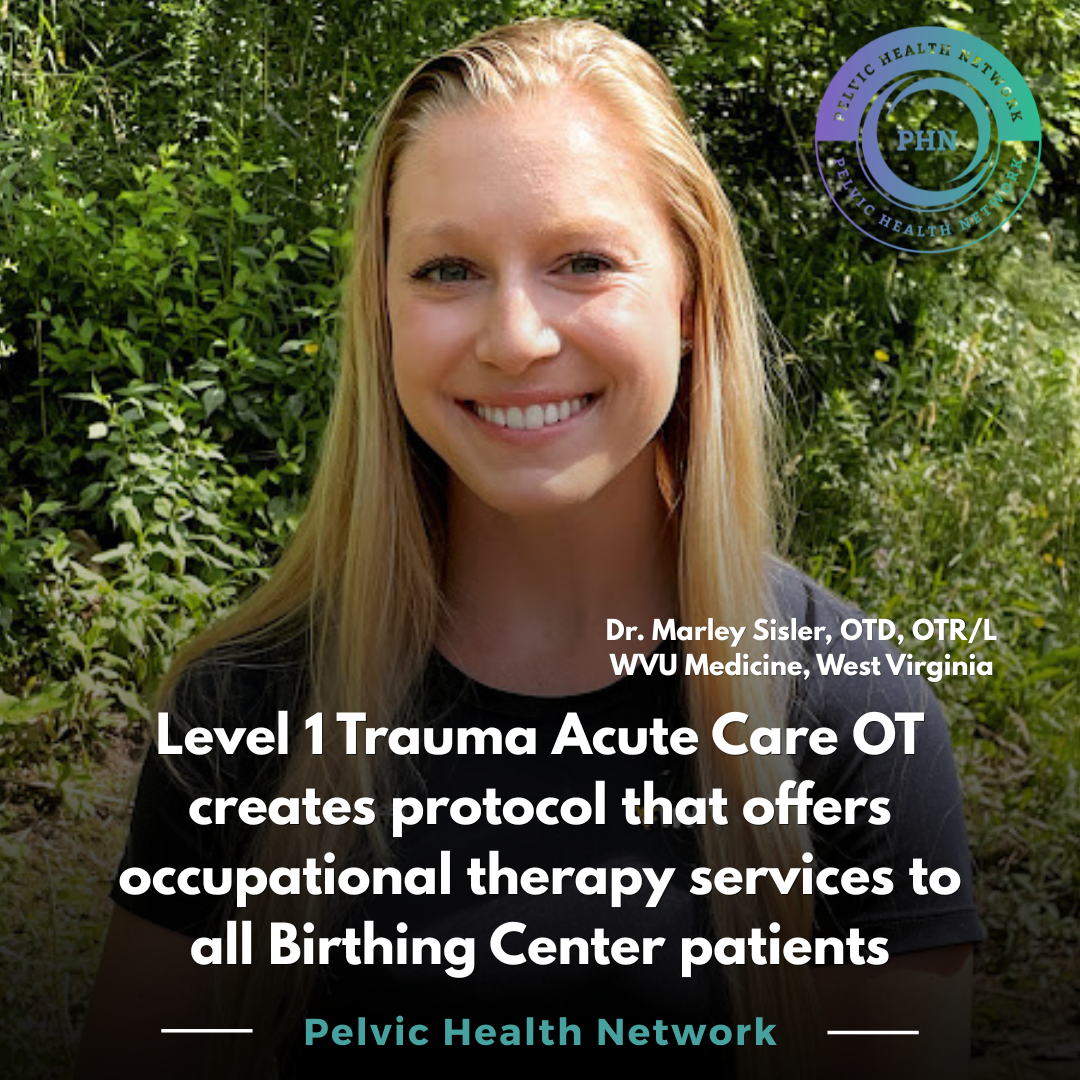
Most mothers leave the hospital with instructions for their incision, bleeding, and medications. Few leave knowing whether they can safely care for themselves or their newborn. For her OTD Capstone, Dr. Marley Sisler, OTD, OTR/L decided to ask different questions before discharge: Can this mother safely get in and out of bed after birth or surgery? Can she transfer on and off the toilet without increasing pain or risking injury? Can she bathe, dress, and complete daily activities independently? Can she safely lift, carry, soothe, and feed her baby? Does pain, dizziness, weakness, swelling, or fatigue limit her ability to care for herself or her newborn? Does she understand body mechanics and energy conservation for the first days and weeks after birth? Are there functional barriers that could make recovery more difficult once she gets home? These questions are rarely answered during a routine postpartum discharge, yet they often determine whether a mother feels prepared when she walks out the hospital doors. At WVU Medicine Children's, Dr. Sisler identified this gap and helped develop a program where occupational therapists evaluate every patient admitted to the Birthing Center using a preventive, functional approach beginning on postpartum day one. The goal wasn't to find more problems. The goal was to identify barriers before they become complications, improve a mother's confidence caring for herself and her newborn, and ensure she leaves the hospital with the knowledge and skills needed for recovery at home. As more hospitals look for ways to improve maternal outcomes, reduce preventable complications, and deliver patient-centered care, functional rehabilitation is becoming an important part of the conversation that Marley will be having with us. REGISTER HERE
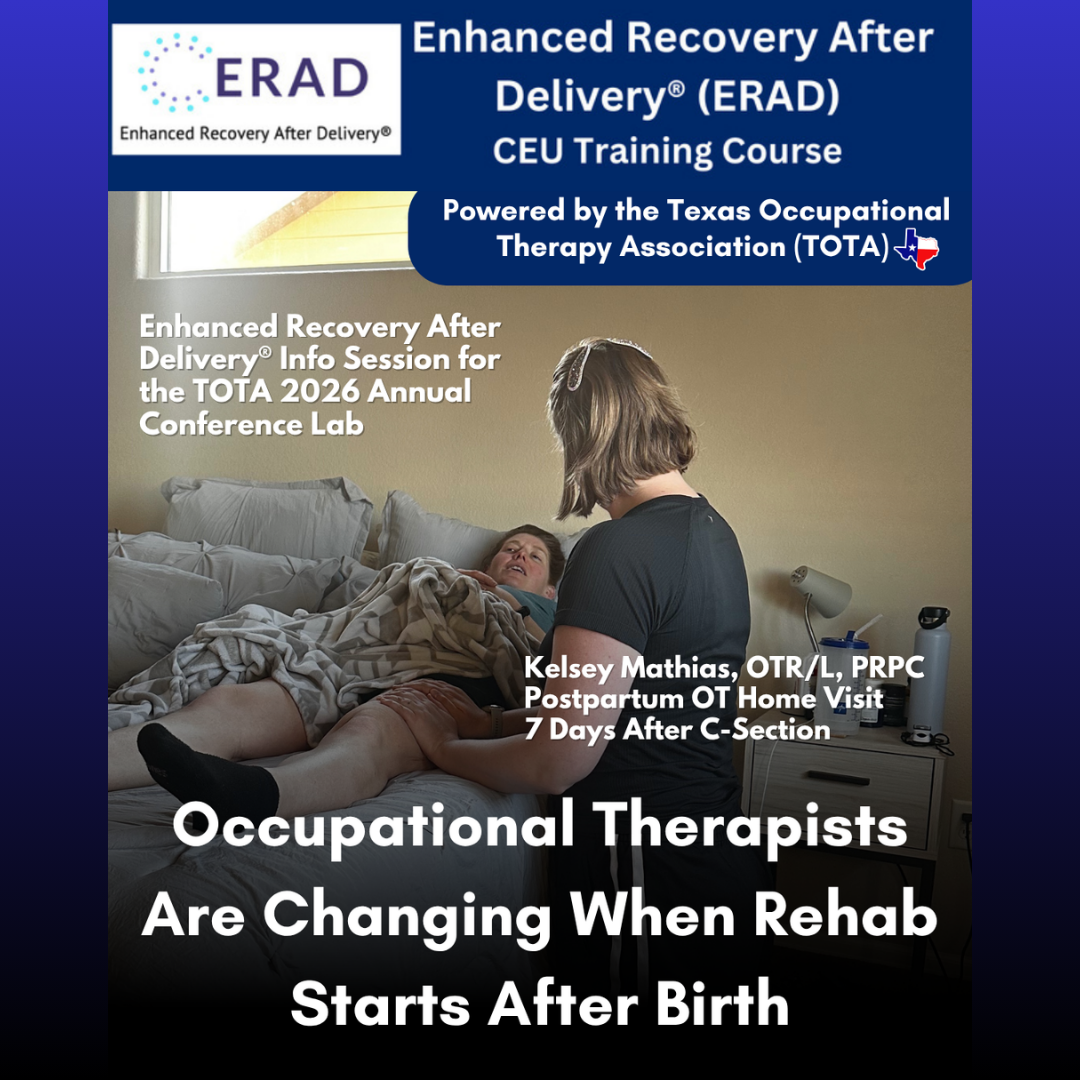
Seven days after an unplanned C-section and a hospital readmission for postpartum hypertension. The first person to look into her eyes and ask how she's doing isn't her doula, isn't her OB, and isn't her partner. It's her occupational therapist, kneeling by the edge of her bed, asking about her thoughts, her body, her pain, and her ability to care for her baby. That visit didn't exist a few years ago. Someone had to build it. The Texas Occupational Therapy Association is bringing the Enhanced Recovery After Delivery® Training to its 2026 Annual Conference, 'Grow an OB Rehab Program in the Hospital and Home' for rehab professionals around the country to attend. This info session is about what becomes possible when you bring your expertise into a hospital or home health setting for families during high-risk pregnancy and immediately after birth and what it means to be the person who builds a pathway for their care instead of waiting for someone else to. If you've ever looked at a postpartum patient and felt like something was missing from her plan, this is for you. Register Here
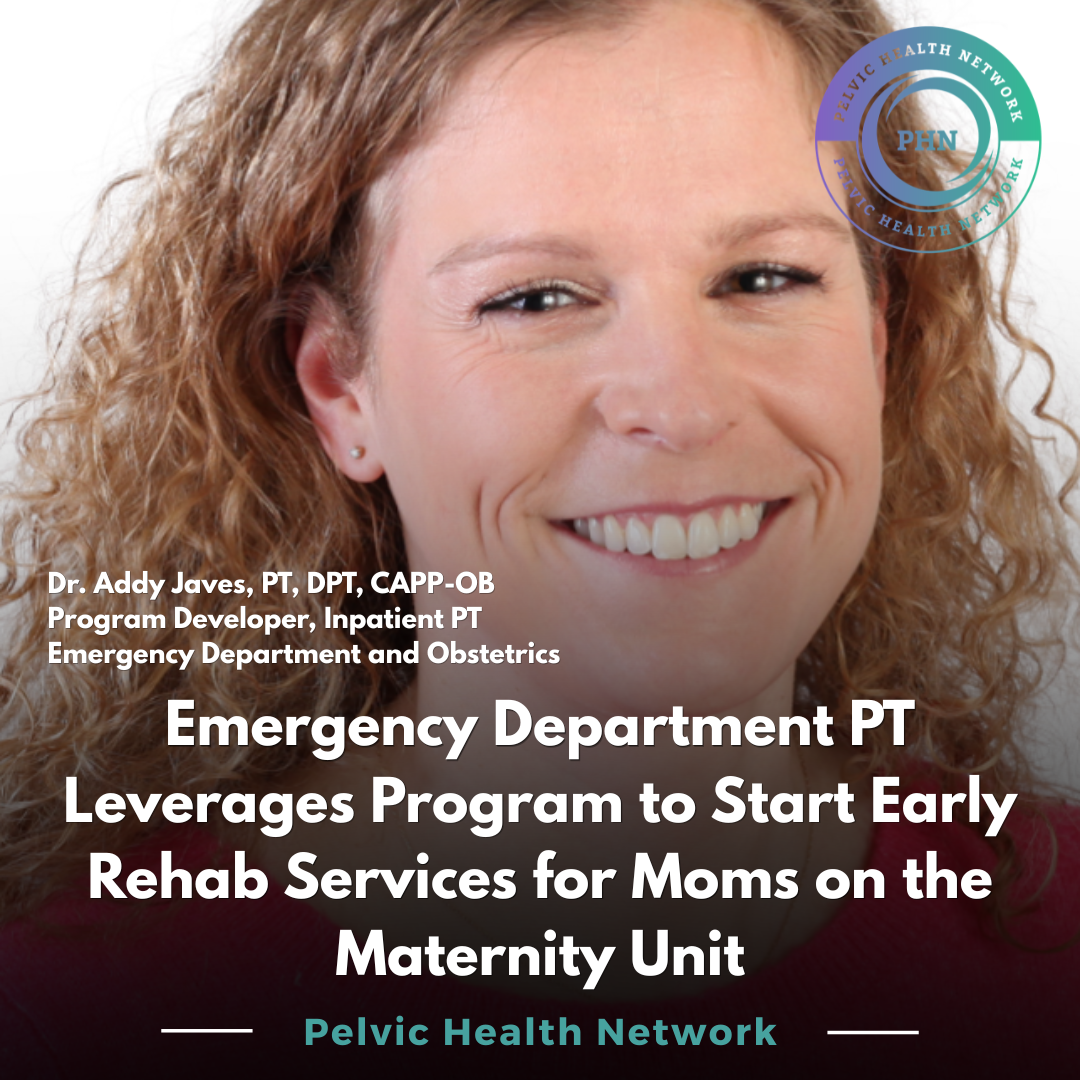
Program development in acute care often feels like uncharted territory, but the strategies for success remain the same across every unit. To successfully launch a new therapy service, you have to master the art of clinical advocacy and learn how to speak the language of hospital physicians. In this webinar, Dr. Addy Javes will share the strategies and lessons learned from her program development journey, and how launching an Emergency Department therapy program paved the way for her hospital's acute obstetric therapy service. We will discuss the precise mechanics of professional advocacy, how to tackle doctor skepticism, and how to successfully pitch a new service line to hospital stakeholders who aren't used to seeing therapists in their units. The goal isn't just to share Addy's story. It is to hand you the exact strategic tools you need to spot hidden gaps, confidently talk to doctors, and pioneer high-impact PT and OT programs in your own facility. REGISTER HERE
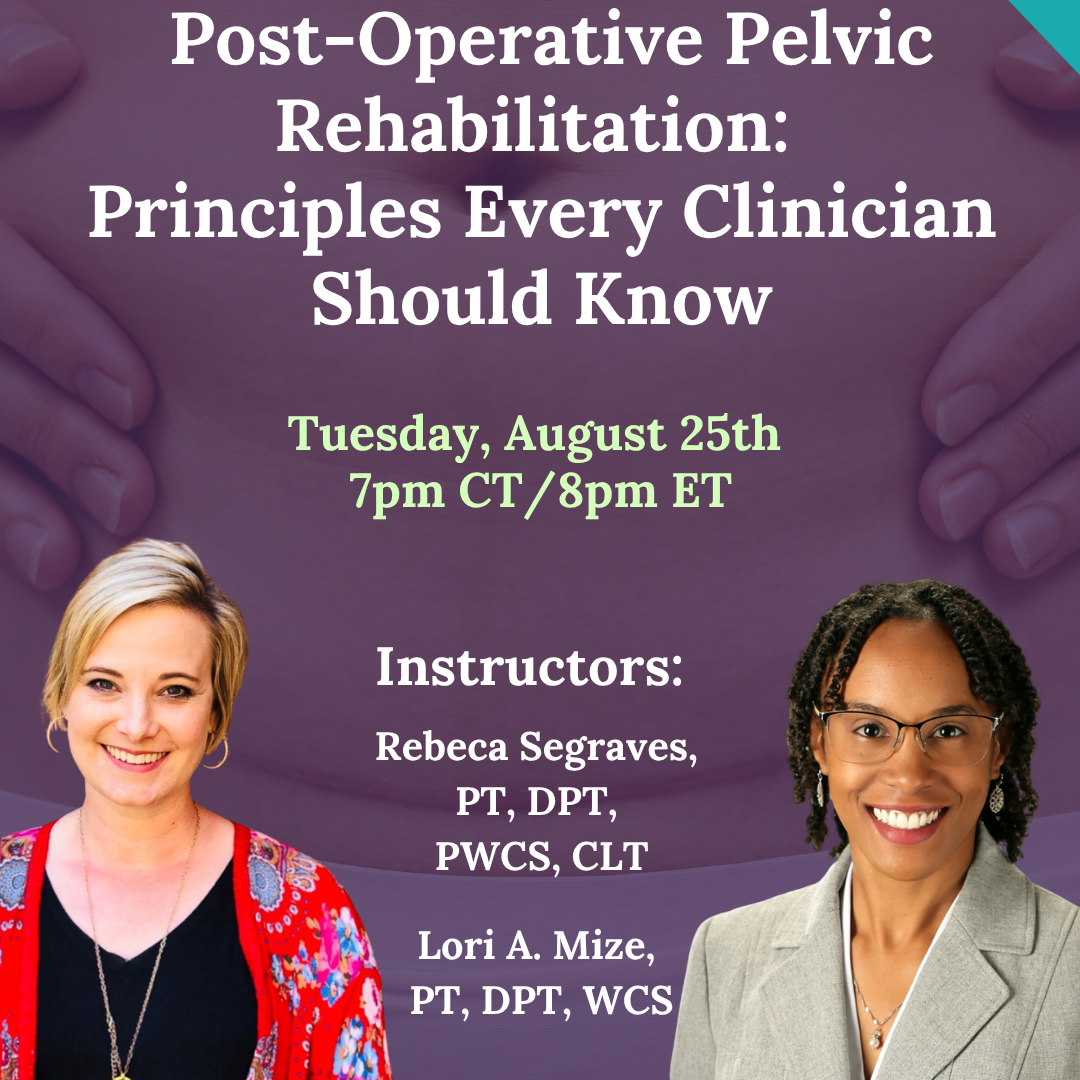
USA: A woman undergoes a hysterectomy every 60 seconds. A C-section every 27 seconds. In the time it takes to read this message, 3 to 5 women will have had one of these two surgeries. Every day, about 1,600 women are recovering from a hysterectomy. Compare that to about 480 patients recovering from an ACL repair, who get an automatic referral to rehab after surgery. About 3,200 women are recovering from a C-section every day without a recovery plan. Compare that to 2,900 patients who get a plan after a knee replacement. Every 60 seconds, at least 2 women after C-section and 1 woman after hysterectomy are recovering from two of the most common major surgeries performed on the human body. Most of these patients go home with a follow-up appointment in six weeks, and no individualized recovery plan before then. Only a small fraction will see a rehab therapist before that six-week mark. Most won't see one at all unless they advocate for it themselves. This gap has nothing to do with a lack of clinical evidence. It's a recovery care pathway that was never built for surgeries performed during childbirth and before menopause. Dr. Lori Mize doesn't believe any woman should wait six weeks after surgery to see a rehab therapist. She trains both OTs and PTs, who account for the largest workforce in the country trained to restore function after a medical event, including surgery. The professionals she trains treat patients earlier after abdominal and pelvic surgery - the most common major surgeries performed on women. On August 25th, Dr. Mize will cover the clinical principles every clinician needs post-operatively. Dr. Rebeca Segraves will cover how to build the pathway that gets patients to you inside that window, instead of six weeks too late. Join them live on Tuesday, August 25th, 7 PM CT / 8 PM ET, to learn both. REGISTER HERE
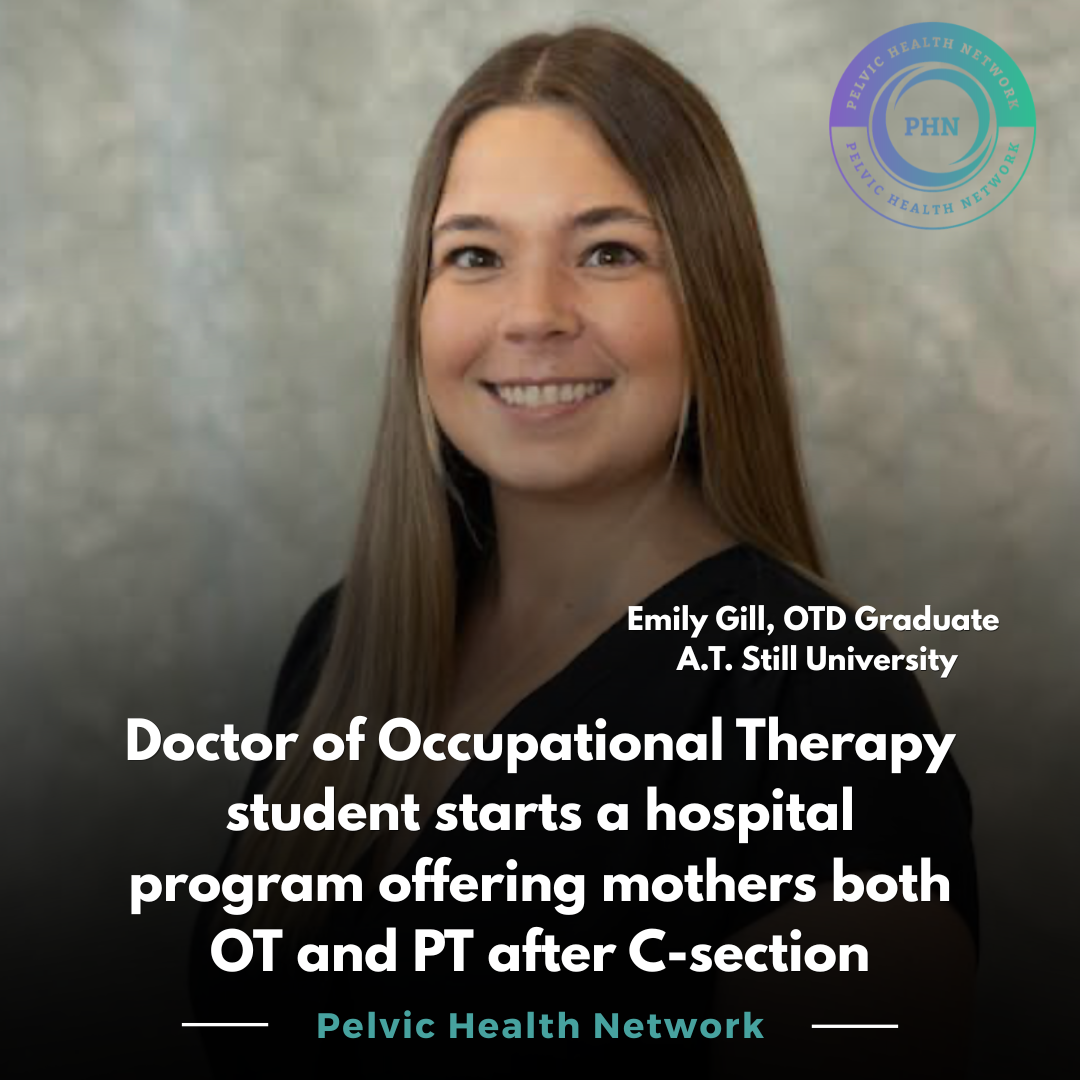
We’re highlighting what can happen when an OT student is taught to do more than treat the next patient on the schedule. Emily Gill used her doctoral occupational therapy capstone at Banner Gateway Medical Center in Arizona to help initiate both OT and PT after Cesarean birth. She worked with nursing leadership, OB providers, and rehabilitation staff to build support for the service, promote referrals, and expand access to rehabilitation for mothers during their hospital stay. Since January 2026, the program has generated 43 referrals, and hospital leadership plans to continue the work after her capstone ends. During this session, Emily will share what she did, who she approached, what helped move the program forward, and what she learned about building an interdisciplinary maternal rehabilitation pathway inside a hospital. Emily is a recent occupational therapy graduate from A.T. Still University whose work focuses on education, program development, and improving access to OT and PT after Cesarean birth. Join us on September 15th at 7 PM ET to hear how one capstone project helped create a pathway for an entire patient population. REGISTER HERE
In this training, participants will learn how to evaluate and treat intimacy as a core component of postpartum care, starting in the first couple of weeks after birth. Intimacy is one of the most overlooked areas of postpartum assessment, and when it is addressed at all, it is often limited to brief counseling on birth control, leaving a significant gap in whole person care. Participants will learn how to assess what intimacy means to each client, including their ideal vision of connection with a partner, and how to identify the physical, emotional, relational, and spiritual factors that may be impacting intimacy in the early postpartum period. The training then translates these findings into recommended interventions matched to each stage of early recovery, so clients can work toward their stated intimacy and connection goals safely and on their own timeline. All content is grounded in current rehabilitation scope of practice and emphasizes client-centered communication, clinical reasoning, and functional outcomes related to intimacy and connection during the early postpartum period. Join us on September 29th at 5 PM MDT for the third training in this incredible series. REGISTER HERE
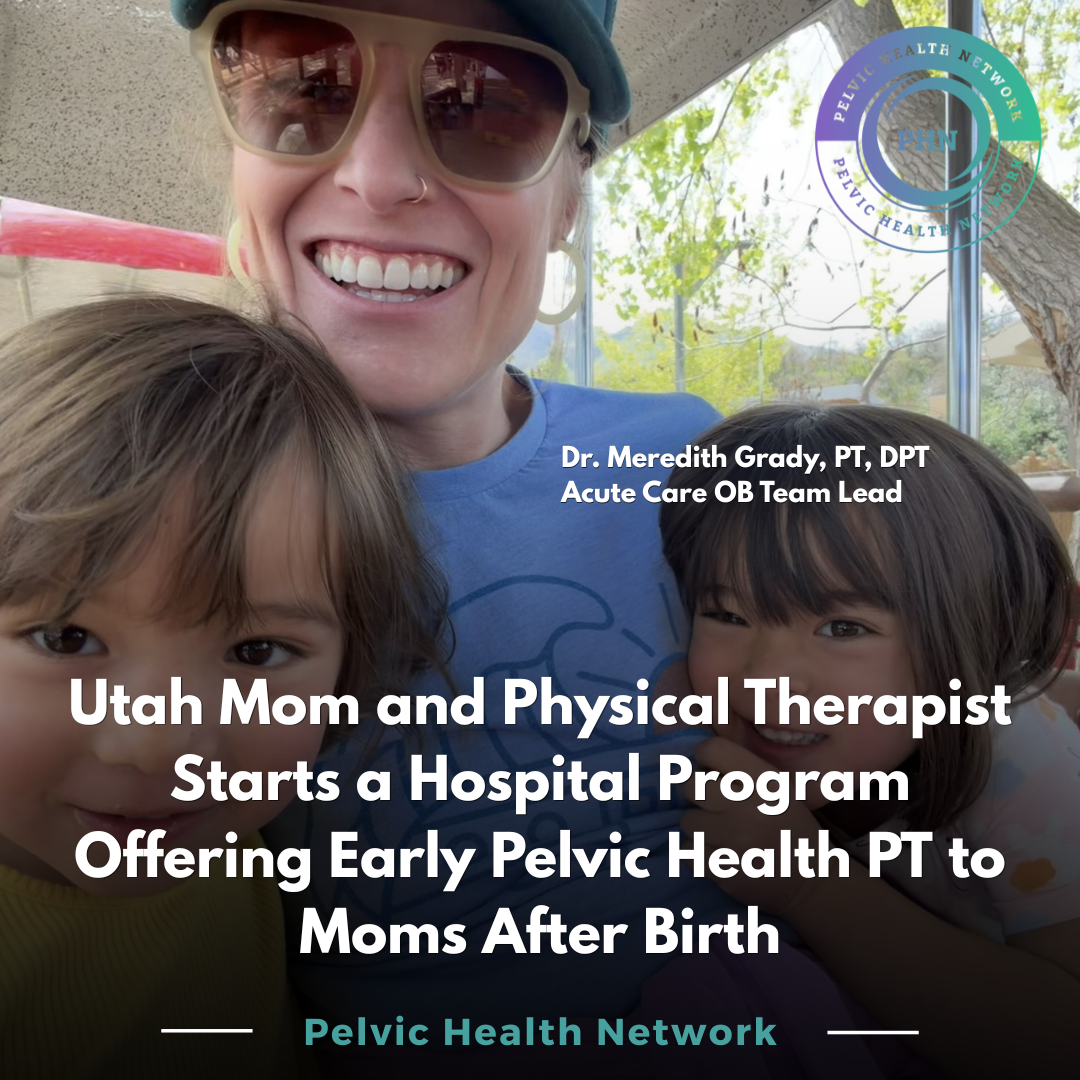
As a pelvic health acute care PT and a mom of two, Dr. Meredith Grady, PT, DPT knows the gap between what childbirth recovery is supposed to look like and what it actually is, because she lived it herself. A hard delivery left her with urinary retention, an unplanned ED visit, and a pudendal nerve injury that took months to heal. She was the clinician who would have caught it in someone else. Instead, she became the patient that nobody caught in time. So she built the program she needed: a full-time pelvic health PT on the postpartum floor at University of Utah Health, seeing moms within 24 to 48 hours of delivery, catching urinary retention, tearing, nerve injuries, and mobility issues before they ever leave the hospital. Getting there meant winning over nurses who didn't know her yet, earning trust from midwives one conversation at a time, and proving to a hospital that never had a PT on this unit that the role was worth keeping. In her live presentation and Q&A, Dr. Grady will share what that actually looked like from the inside: her own story, the mistakes she made early on, and the daily rhythm of a program built specifically around the pelvic floor needs of moms in the first hours and days after birth. Come hear how one PT is changing what postpartum care looks like, starting with her own hospital and her own recovery. REGISTER HERE
Some hospitals are already supporting moms after discharge, through home programs, telehealth visits, or expedited referrals to outpatient pelvic health clinics. Most of that work is not documented anywhere. The Postpartum Recovery Hospital Directory lists hospitals with OT and PT on the maternity unit, but it does not show what happens next: how soon a patient is seen after Cesarean delivery, levator ani or perineal injury, obstetric nerve palsy, hemorrhage, preeclampsia, tailbone injury or any other complication. This roundtable brings hospital team leaders together to share how they bridge the gap from discharge to early rehab, discuss the barriers to early follow-up care, and look at what the 2027 maternity billing changes could mean for postpartum follow-up. REGISTER HERE