Nearly Missed: Postpartum Fluid Overload After C-Section

By Rebeca Segraves, PT, DPT, PWCS
Jenna was an ultra-endurance athlete who knew her body well. She understood effort, recovery, hydration, breath, and the difference between discomfort and danger. That should have helped her medical providers recognize how serious her symptoms were.
Instead, her fitness became part of the reason her crisis was nearly missed.
In the hospital record, she looked reassuring. She was healthy, strong, active, and disciplined. She had the profile of someone expected to recover well. Yet childbirth, especially childbirth after a long labor and a Cesarean delivery, does not always respect the outward signs of fitness. It has its own physics. It shifts blood volume, redistributes fluid, taxes the heart, and asks the body to perform a radical circulatory reversal almost overnight. Sometimes the person who appears most robust is the one whose reserve allows clinicians to underestimate how fast a decline is already underway.
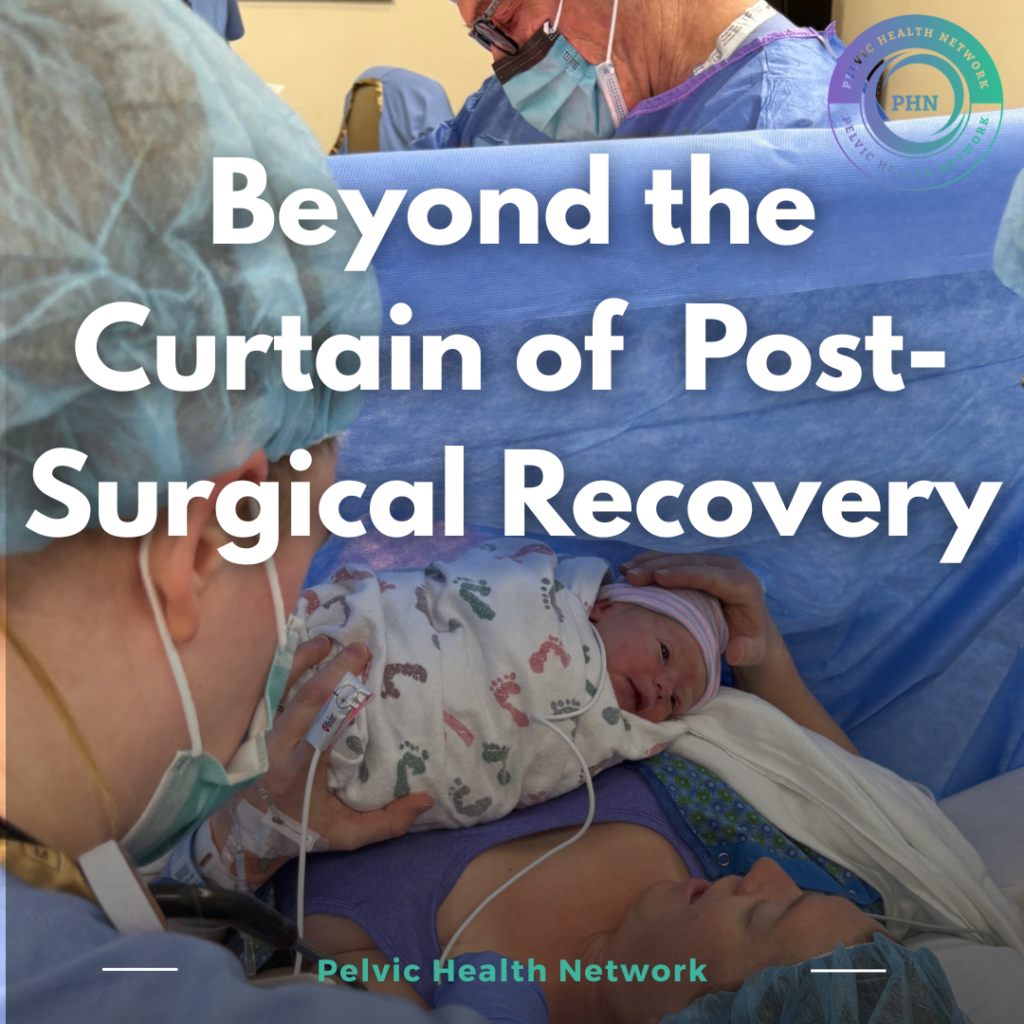
That is the part of postpartum medicine rarely seen from the outside, the Beyond the Curtain reality. The baby is here. The photographs begin. The congratulations arrive on schedule. Meanwhile, behind the curtain, a mother may be accumulating fluid, losing respiratory comfort, and crossing from recovery into crisis while everyone around her keeps using the language of normal.
The First Forty-Eight Hours
Her labor lasted thirty-two hours, long enough to turn time into something heavy and indistinct. Her water broke before labor truly began, so IV antibiotics became part of the unfolding plan. Later, when the baby showed heart rate decelerations, fluid boluses followed, one intervention after another, each clinically legible on its own, each intended to steady a difficult course. By the time she reached an emergent C-section, the arithmetic of all that fluid had become its own hidden story.
Still, the immediate aftermath offered reassurance. Jenna got up. She walked. She did what athletes do, which is to perform function even when function is costly. Her blood pressure at discharge was 104/76, a clean number, the kind that allows a chart to close with quiet satisfaction. Nothing about the moment invited alarm if one looked only at protocol. Yet protocols can be blunt where physiology is personal. A patient with a naturally low resting heart rate and a deeply conditioned cardiovascular system does not announce distress the same way everyone else does. What appears stable in the abstract can be ominous in context.
For the first two days, she seemed to be moving through a hard but ordinary postoperative recovery. Then, on postpartum day three, something changed.

The Night She Could Not Lie Down
The symptom was simple, and because it was simple, it was easy to miss the magnitude of what it meant. Jenna could not lie flat.
For many people, that sentence lands softly. It sounds uncomfortable, inconvenient, maybe anxious. In medicine, however, it has a precise name: orthopnea. It’s one of the clearest signs that fluid may be backing up in a way the heart and lungs cannot easily manage. Jenna felt it as an immediate bodily refusal. The flat position, which should have brought rest, instead produced pressure in her chest and a sensation that breathing had become newly difficult, newly conditional. There was a whooshing in her ears. Walking even a few minutes left her markedly short of breath.
This mattered not only because of what she felt, but because of who she had been before that moment. Jenna was not someone unfamiliar with effort. She was not someone likely to confuse exertion with emergency. If an ultra-endurance athlete says she cannot lie down without feeling as if she is suffocating, the statement should reorder the room.
Instead, too much of the response remained attached to thresholds rather than to her lived baseline. Her blood pressure was around 130/90. On paper, that may not look dramatic. For Jenna, it was a sharp departure from normal. The same was true of the broader clinical picture. What she experienced as an unmistakable internal alarm was treated, at least initially, as a variation within acceptable range.
This is one of the enduring weaknesses of standardized postpartum care. It often waits for dramatic numbers and misses dramatic change. It treats a universal cutoff as more meaningful than an individual trajectory. Yet medicine, at its best, is not the worship of thresholds. It is the interpretation of a pattern.
The Number That Led to Readmission
By postpartum day four, Jenna had moved beyond unease into a harder category of knowing. Before heading to the OB emergency department, she checked her blood pressure. It was 170/94. The number was alarming, but the larger alarm had already been building inside her body. She had chest pressure. She could not lie flat. She was short of breath in a way that did not belong in recovery.
She first went to OB triage at UCHealth Memorial North. There, the distance between physiology and interpretation widened. Dr. Judith Brinkman, MD met her concern with a reprimand disguised as reassurance: “Why are you measuring your own blood pressure? You’ll just get yourself worked up. You need to go home and rest. Walk for 10 minutes, three times a day. My patients don’t take their own blood pressure… You should let us do our job.” When Jenna raised the concern of experiencing pressure in her chest and the feeling that something was wrong with her heart, the answer was another deflection: “That’s not our area here. We don’t do anything with the heart. You need to go down to the main emergency department for that.”
It is difficult to overstate what moments like this do to a patient. Medical gaslighting is not only the dismissal of symptoms. It shifts uncertainty from the system onto the person asking for help. It teaches patients to question what they already know is happening in their own body. Jenna was not wrong. She was being told, in effect, not to trust herself.

Then, in the main emergency department, the picture became harder to dismiss. Her systolic blood pressure climbed above 180. Her heart rate, for her condition, dropped dangerously low. IV medications were started. The language of reassurance gave way to acute care.
Then came the lab value that changed the tone of the story. Her BNP, B-type Natriuretic Peptide, was 1650.
Numbers can clarify what a patient has been trying to say all along. BNP rises when the heart is under major stress. Jenna’s result did not suggest a mild postpartum issue. It pointed to a cardiovascular system under acute pressure. The diagnosis, once the data was finally taken seriously, was postpartum fluid overload with acute heart failure.

In plain terms, Jenna was retaining so much fluid after birth that her heart and lungs were under strain. This was not anxiety. This was not normal recovery. This was a postpartum emergency.
From Athlete to Patient
Illness often begins with a fracture in identity before it becomes a treatment plan. Jenna had entered birth as someone accustomed to mastery, or at least to disciplined adaptation. She knew how to work with a body under stress. Postpartum fluid overload demanded something else entirely. It transformed her from a person who trusted in her body’s reliability into a person forced to argue for the legitimacy of her own symptoms.
That transition, from athlete to patient, is not only physical. It is psychological, social, and moral. The athlete is often presumed resilient, self-aware, almost unusually safe inside her own physiology. The patient, by contrast, enters a hierarchy in which testimony may be doubted until it is translated into objective findings. Jenna inhabited both realities at once. She knew enough to recognize danger. She still needed a system willing to hear her before the lab value arrived to validate her.
She was not navigating that danger alone. External support helped preserve her confidence when the local clinical response did not. Dr. Katherine Denise Sylvester, PT, DPT, monitored Jenna remotely and advised on labs, giving shape and urgency to what might otherwise have been dismissed as vague postpartum distress. Kelsey Mathias, OTR/L, PRPC, postpartum home health OT, offered specific guidance on activity tolerance and how to return to walking safely, rather than the generic advice so many postpartum patients receive. In a moment when the formal system blurred the line between vigilance and overreaction, their precision mattered. They helped Jenna stay grounded in the clinical reality of what was happening.

Early recognition is what could have narrowed that gap. Orthopnea on postpartum day three after a long labor, multiple fluid exposures, and Cesarean delivery are not a footnote. Their combination was a red flag. A person who cannot lie flat after being stable for the first forty-eight hours requires urgent reassessment, not just reassurance. The lesson is not complicated, though it remains too easy to overlook: postpartum decline often begins in plain language before it appears in catastrophic numbers.
What Her Story Demands
Jenna recovered because the problem was eventually named and treated. Diuresis and cardiovascular management began to reverse the crisis. But recovery does not erase the structure of the near miss. Her story points to a broader failure in how postpartum medicine distinguishes between expected discomfort and a growing emergency, especially after Cesarean birth.
The postpartum period remains one of the least romantically visible and most medically volatile intervals in healthcare. Much of it unfolds out of frame. The public sees the baby in the bassinet, the blanket, the discharge, the family photo. Behind the curtain, clinicians and families confront fluid shifts, blood pressure changes, respiratory symptoms, pain, immobility, and the dangerous temptation to explain away deterioration as part of motherhood’s ordinary cost.
That is why early recognition matters, and why systems need a more robust response in the first days after birth, not merely at six weeks. Patients and families need clear education about warning signs such as orthopnea, sudden shortness of breath, chest pressure, and rapid functional decline. Hospitals need pathways that take baseline physiology seriously. Rehabilitation professionals, nurses, and physicians need shared language for identifying when recovery has gone off script.
A useful starting point is stronger visibility into hospitals that already support earlier postpartum recovery and surveillance. The postpartum recovery hospital directory offers one way to identify where that shift is beginning.
Jenna’s story is memorable because the contrast is so stark. An ultra-endurance athlete, a person highly tuned in to her own body, reached a point where lying flat became impossible. On day four, she arrived with a blood pressure of 170/94 and was told in OB triage, “Why are you measuring your own blood pressure? You’ll just get yourself worked up. You need to go home and rest. Walk for 10 minutes, three times a day. My patients don’t take their own blood pressure… You should let us do our job.” Then she deteriorated further in the main emergency department, where her systolic pressure rose above 180 and IV treatment began. A BNP of 1650 turned suspicion into proof. Yet the deeper significance lies not in the number itself, but in the warning signs that came before it. She knew something was wrong on day three. Her fitness did not protect her from postpartum fluid overload. In some ways, it made it easier for others to miss how serious the situation had become.
Resources & Advocacy
Operation M.I.S.T. aka The Mommy Monitor – Monitoring Moms for Better Birth: https://operationmist.org/
Watch Jenna’s full story and interview with Dr. Katherine Sylvester, PT, DPT:
Four Days After Birth Her Blood Pressure Hit 170/94
The postpartum recovery hospital directory offers one way to identify hospitals supporting earlier postpartum recovery and surveillance.