
How Protecting the Specialty Created the Gap That’s Now Being Filled Without Us
In 2022, a system-wide outpatient pelvic health meeting became a flashpoint for the future of maternal rehab and a clear example of the territorial problem in pelvic health.
An acute care obstetrics rehab program was presented to a room of experienced pelvic health therapists. The data was compelling and the clinical need was undeniable. However, the atmosphere in the room was not one of collaboration. The outpatient therapists in attendance were managing wait lists that exceeded 30 days. Patients were seeking care for early postpartum recovery, yet the system could not accommodate them.
When the conversation turned toward training outpatient orthopedic therapists to see post-Cesarean patients earlier, the tone shifted. The room pushed back with unforgettable resistance. The prevailing argument focused on the exclusivity of the specialty. The therapists maintained that orthopedic clinicians were not pelvic health specialists. They feared that generalists would miss critical clinical nuances. Consequently, the group decided that the specialty needed to be protected.
Dr. Jenna Segraves, PT, DPT, NCS, the acute care therapist presenting the inpatient program, left the meeting seeing the problem more clearly. The gap in early maternal care remained open. Essentially, the very professionals dedicated to pelvic health had chosen to maintain a gatekeeping approach, even as the patients they served continued to fall through the cracks of a broken system.
The Human Cost of the Specialized Wait List
While the clinical community debated qualifications, the women waiting for appointments were not waiting in comfort. A 30-day wait list is not a mere administrative inconvenience for a person recovering from major abdominal surgery. These patients were managing Cesarean incisions while simultaneously lifting and caring for newborns. They were doing so without instructions specific to their surgical recovery or functional needs.
Specifically, these patients found it increasingly difficult to manage progressively longer bouts of physical activity. Many experienced pelvic pressure and persistent pain. Because they lacked post-surgical guidance, they assumed these symptoms were a normal part of the postpartum experience. No clinician had told them otherwise.
Furthermore, the next available appointment was five weeks away. This vacuum of care creates a dangerous precedent where manageable issues transition into chronic dysfunction. When specialists prioritize the boundaries of their discipline over the immediate access to individualized care, the patient is the one who pays the price.

A Modern Model of Scalability at Duke University Hospital
Contrast the 2022 territorial dispute with what Duke Health built in August 2023. This program did not begin with a professional mandate. It began with a patient request, a far more powerful catalyst. A patient asked for better postpartum support, and the system responded by redesigning care around access rather than around turf. That distinction matters. In the 2022 meeting, clinicians defended the perimeter of a specialty. At Duke, leaders listened to the person living the gap and built a new standard.
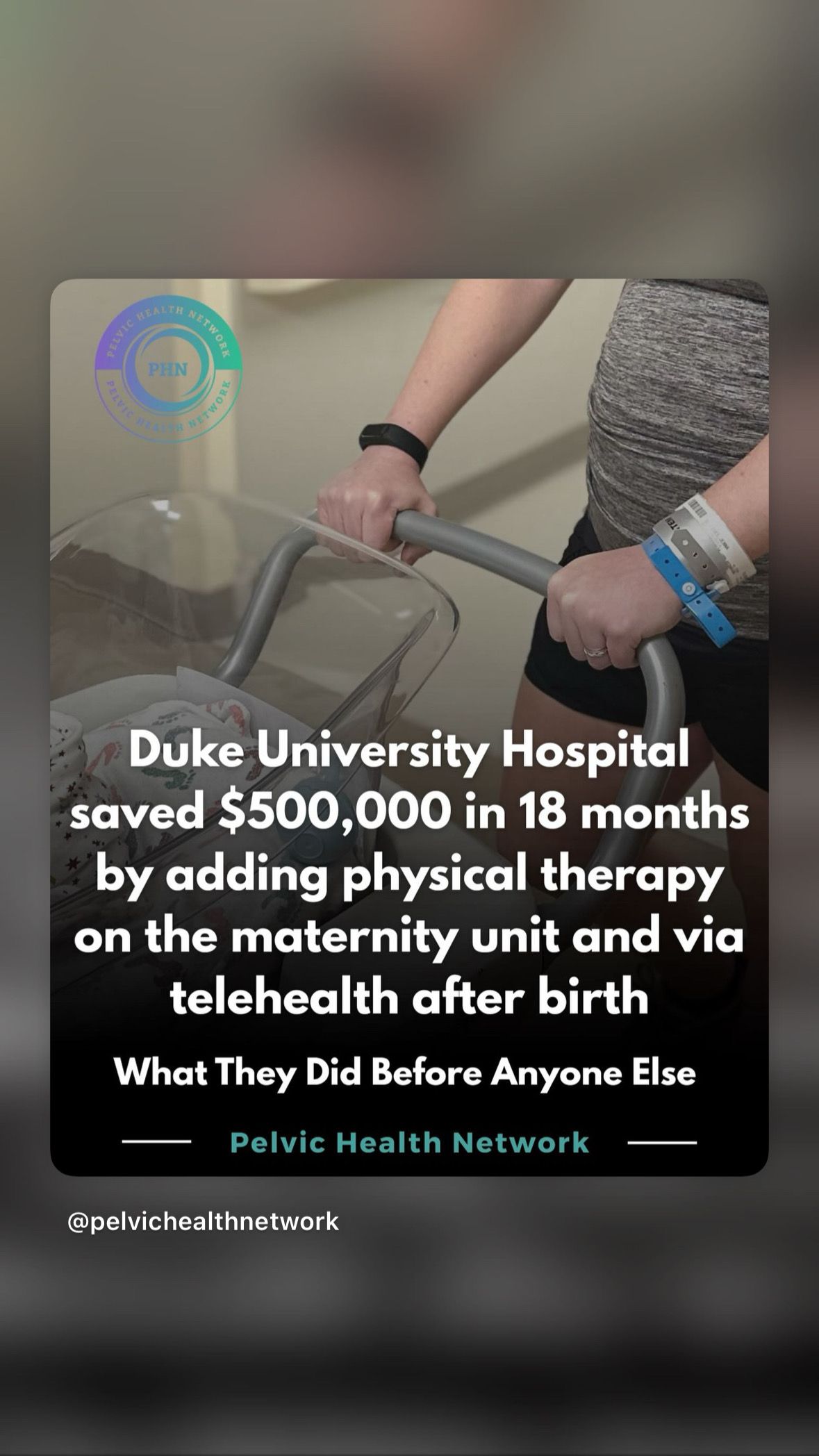
Their strategy was simple, scalable, and disruptive. Duke trained more than 60 outpatient orthopedic physical therapists to evaluate and treat common pregnancy and postpartum musculoskeletal conditions. That move expanded capacity quickly. Just as important, it protected specialist time for the patients who truly needed pelvic floor expertise. Instead of forcing every postpartum concern through a narrow specialty funnel, the system created a tiered model. Orthopedic PTs managed musculoskeletal recovery, while pelvic health specialists focused on pelvic floor dysfunction and higher-acuity presentations. This is what real collaboration looks like when a health system stops treating expertise as a guarded territory and starts deploying it as infrastructure.
The model also replaced the outdated six-week silence with an earlier point of contact. A two-week telehealth touchpoint became the new standard, giving patients access to guidance when symptoms first emerge, not after dysfunction has had time to harden. In 18 months, the program generated $500,000 in savings through reduced readmissions. That figure reframes the entire conversation. Early postpartum rehab is not a boutique service. It is a systems strategy with clinical and financial returns.
The success at Duke proves that the recommendation to involve orthopedic therapists was never the problem. The problem was the profession’s willingness to confuse protectionism with quality. The difference between the 2022 meeting and the Duke blueprint was not evidence, because both had that. It was posture. One approach defended scarcity. The other built access. One protected a specialty. The other protected patients.
The Digital Health Disruption
The healthcare industry does not exist in a vacuum. While the physical therapy profession was debating who was qualified to see these patients, the private sector was moving to fill the void. Digital health companies began shipping biofeedback devices directly to women with pelvic floor dysfunction. These platforms offer 20-minute therapist check-ins via telehealth. There are no 30-day wait lists in the digital health model. There are no territorial disputes between departments.
These companies recognized that the demand for maternal health support was not being met by traditional hospital systems. Consequently, they built a parallel infrastructure that bypasses the gatekeepers entirely. The walls of the traditional clinic were falling while the professionals were still arguing at the gate. If the profession continues to prioritize exclusivity over access, it risks becoming irrelevant to a consumer base that values speed and convenience.

Moreover, the rise of these digital solutions highlights a critical systemic weakness. When patients cannot access a therapist, they settle for pre-fabricated algorithms and biofeedback devices. While convenient, these ‘one-size-fits-all’ programs lack the individualized care plan and integrated medical oversight that only an interdisciplinary team can provide. The gatekeeping mentality doesn’t protect the specialty; it just pushes patients away from nuanced, person-centered care and toward unregulated, automated alternatives.
The Sustainability of the Profession
The sustainability of the pelvic health profession depends on a fundamental shift in strategy. Professionals must advance to design earlier pathways to care. This requires a move away from the “pelvic health or nothing” mentality. The maternal health crisis in the United States demands a collaborative, all-hands-on-deck approach. This includes training orthopedic therapists, integrating acute care rehabilitation, establishing best practices in digital care, and fully collaborating across both occupational therapy and physical therapy disciplines to address the functional demands early after birth and major pelvic surgery.
Protectionism is a trap that leads to professional isolation and patient neglect. The Duke University Hospital example serves as a blueprint for what is possible when healthcare leaders choose innovation over tradition. By empowering more clinicians to provide early-stage support, the specialty of pelvic health is actually strengthened. It allows specialists to focus on the most complex cases while ensuring that every postpartum patient receives the basic rehabilitation they deserve.
Ultimately, the profession must decide if it wants to be the gatekeeper or the gateway. The current maternal health landscape suggests that the time for debate has passed. Healthcare systems must implement early recovery protocols that bridge the gap between birth and the traditional six-week checkup. This starts with a commitment to accessibility and a willingness to share knowledge across disciplines.
For those looking to lead this change, the first step is identifying the systems that are already getting it right. Patients and providers alike can explore the postpartum recovery hospital directory to find facilities that prioritize early access and integrated rehabilitation. The future of maternal health is not found in the protection of a specialty, but in the expansion of care for every mother.
References
- Duke Health Inpatient/Telehealth Postpartum PT Program: https://obgyn.duke.edu/blog/duke-health-inpatienttelehealth-postpartum-pt-program-benefits-patients
- Implementation of Acute Care OB and Postpartum Telehealth at Duke: https://www.aptapelvichealth.org/info/implementation-of-an-acute-care-ob-and-postpartum-telehealth-program-at-duke-health